You may have noticed something has changed in the luxurious 10 cm legroom low-cost airlines treat us to. In recent years, some wicked mf has figured that since you are going to be staring at the back of the seat in front of you for the entirety of your trip, they may as well put an ad in there. One that you don’t even have the choice to see or not, that you cannot “unsee”, because it’s going to be in front of your fucking face for the next two hours.

Every corner and aspect of our lives has been plastered with ads. We are being bombarded with advertising everywhere we go: gyms, shopping malls, roads, bus stops, airports, post, the Internet. And don’t even get me started with social media, once a content platform with ads, now lucky you if you find a piece of content in between all the ads. But my favourite example of this ad-surge craze are those recipe-websites whose ads have cannibalised the content, making it literally unreadable.

Global ad spending surpassed $1 trillion for the first time in 2024, growing more than 10% from the year earlier, and is projected to rise 80% by 2026 from the pre-pandemic 2019 levels [1]. That’s just roughly half of what the world spends on military [2]. For comparison, car sales, global GDP and population will only grow ~4%, 15% and 6%, respectively, over the same period.
How can so much money be poured into advertising? How did two of the most powerful companies in the world — Google’s Alphabet and Facebook’s Meta — end up as advertising companies? Why did they morph into this portable, highly-personalised, digital billboards, as opposed to selling a legitimate product? And why is now this twisted business model of giving access to a platform for free in exchange for ads more lucrative than selling the product for money, as it always has been?
Today I’d like to understand how we’ve come to this situation. Here are the three major forces that in my view explain how we got here.
Advertising as a Prisoner’s Dilemma
The more companies spend on ads, the more they need to spend on ads to maintain their visibility
Imagine two toothpaste manufacturers: dental A and dental B. Other than their packaging and their names being different, there is not much difference in terms of actual product/flavour/price. Both toothpastes sit next to each other in the same shelf in the supermarket. Consumers choose one toothpaste over the other almost randomly, just because they happened to like one package over the other. So in the end both companies end up with more or less 50% of the market share. (As an aside, I chose toothpaste as an example because it’s a pretty useless product, which mostly exists thanks to clever advertising [3]).
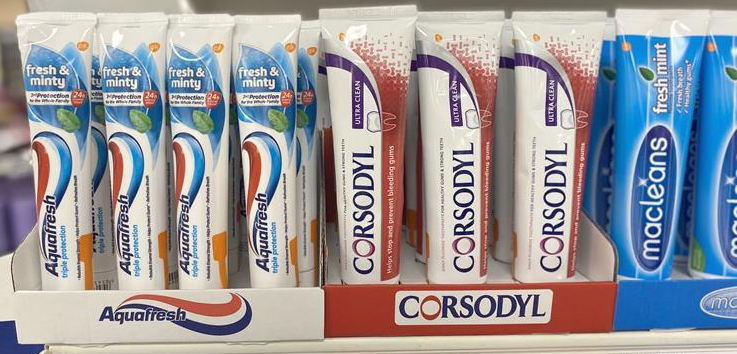
Now dental A decides to run an ad campaign. Hires a model with an angelical face and the most perfect and whitest smile you’ve seen in your life and plasters her (Photoshopped) smiling face all over the place. With this, dental A manages to convince part of the public (consciously or not) that angelical goddess level of beauty and rubbing your teeth with dental A are somehow connected. Sales rise. Dental B, seeing its sales in decline, takes notice and runs a bigger campaign on social media, this time using the oldest trick in the book: before and afters of clients that used to have tainted-brown and totally-crooked teeth but which now smile full of confidence after regaining their white, and perfectly aligned teeth.
Dental A, seeing some of its clients now preferring dental B, decides to invest even more money into an even bigger ad campaign. Dental B strikes back with yet a bigger campaign and this process continues ad infinitum, until every corner of reality (virtual or not) has become plastered with ads. Not only the whole thing spirals out of control but sadly most of the money you pay for toothpaste goes into covering ad spending, without any real increase in product quality.
This is effectively the Prisoner’s Dilemma at play, a Game Theory thought experiment which applies to many facets of life, such as arms race or doping in sport competitions. We encounter the Prisoner’s Dilemma in any situation where two opposing players would be better off cooperating or agreeing not to take action against the other. However, each player has an incentive to take action against the other, because it temporarily puts them at an advantage. In the case of ad spending, we’d all be better off if no one spent on ads: companies could produce cheaper products; we would not need to constantly deal with so much persuasion to buy shit we don’t need. Sadly, we find ourselves in a situation where competition for attention has spiralled out of control. It’s the same reason why the U.S can never cut military spending, because doing so would mean losing its hegemony over China or Russia. But if all countries agreed to disarm, then the world would be a better place (I agree though that this is utopic thinking).
Nowadays the situation is even worse because dental A and B not only compete against each other to persuade you to buy toothpaste, but against every other advertiser, because our attention is already saturated. In other words, the more companies spend on ads, the more they need to spend on ads to maintain their visibility. That’s why some ads no longer look like actual ads, but almost exist just as a reminder that their product exists, lest your overloaded brain forget.
Decreased Costs, Increased Effectiveness
The Internet as a giant shopping mall
Traditionally, advertising was limited to big firms that could afford campaigns on traditional media such as TV or radio. With the advent of the Internet, advertising became not only cheaper, but also much more effective. Firms like Google or Meta charge per click or impression, making campaigns a safer bet overall and easier to scale. Moreover, contrary to traditional media, the Internet is a two-way system: companies can harvest user data and monitor their reactions (e.g., viewing time, clicks, impressions). This allows advertisers to target specific audiences and adjust campaigns in real time, reducing wasted impressions and lowering cost per conversion.
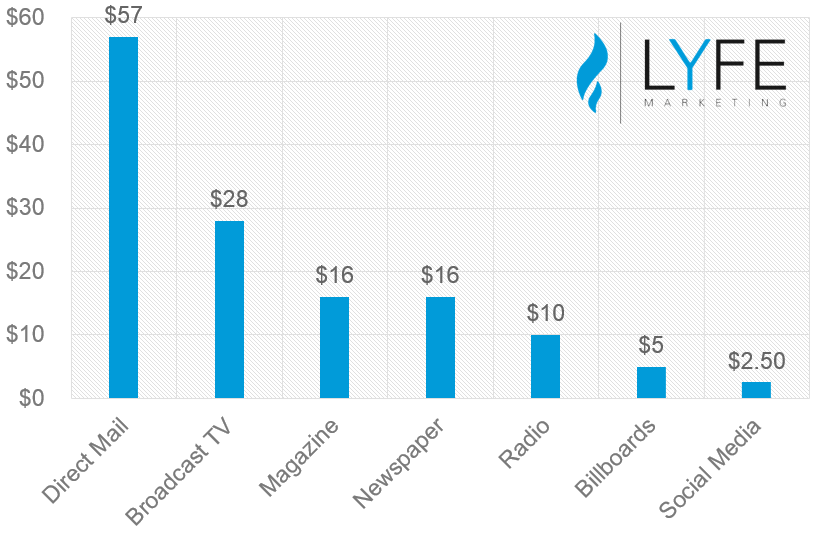
Modern advertising is more efficient and effective than ever. And because ads convert better, it is only natural that more companies are incentivized to run ads.
At the same time, there has been a dramatic reduction of the production cost. Before you needed casting, filming equipment, expertise, printing and so on to make an ad. Now anyone can create an image, an infographic, a short video or a website, basically for free. So not only the price of running ads has decreased, but also its production.
This is why some people refer to the Internet as a Giant Shopping Mall, cause every piece of content is now either an ad or a gateway to purchase. However, while the cheapening of ad campaigns and production have been a major contributor to the surge of ads on the Internet, there is another factor contributing to the massive (and never-ending) surge in ad-spending elsewhere.
Supply Exceeds Demand
Corporations have long shifted from meeting the existing demand to generating it
Some economist think markets have decades ago stopped following the rules of capitalism, because the supply has long since surpassed demand [4,5]. Think about it. Do we really need more Oreo flavours? More clothes? More content on social media? More cars? More phones? More shows on Netflix? A thousand robot vacuum cleaners listed on Amazon? Pecan Crunch Oatmilk Latte? (yes that’s an actual Starbucks flavour. I swear, look it up).

So corporations have long shifted from meeting the existing demand to generating it. The focus is no longer on creating products that enhance our productivity or solve real problems. Instead, product advertising focuses on stirring emotions, on exploiting our psychological weaknesses to keep us buying shit we don’t need. Who twenty years ago thought, “Oh, I wish instead of going to that restaurant I could just have the food delivered to my mouth”? That’s why marketing departments and advertising have come to dominate the world (and markets) we live in.
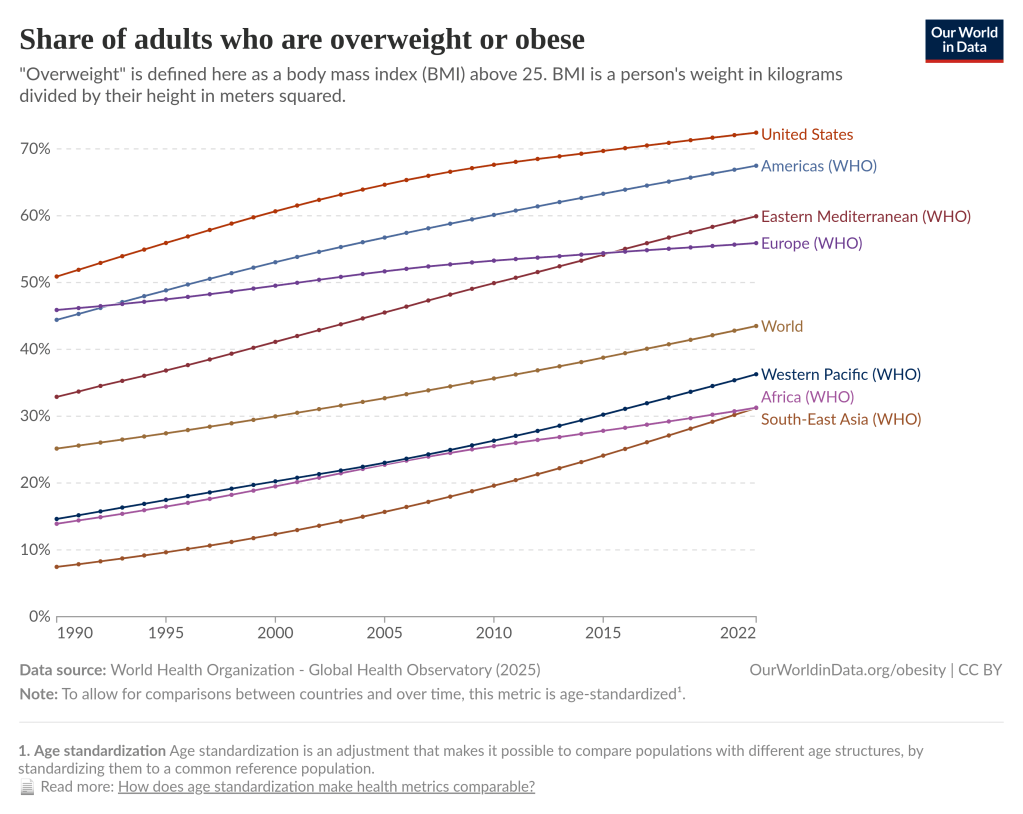
And the cracks of this over-consumption are already showing, because artificial demand is hitting its hard limit: our biology. We keep spoon-feeding the obese to death, we have an information overload rotting our brains and Netflix has openly admitted his biggest competitor is our sleep. We are not consuming more not because we don’t want to, but because we can’t — we have reached the limits of what our biology allows us.
This situation not only forces us to over-consume, but it means product quality no longer reigns. Instead, it is the company with the loudest or most convincing ad campaign who ultimately wins the market. Who knows? Maybe one day fridges will be free as long as we are happy with them spitting out an ad every 5min or so? We’ll eventually realise Black Mirror’s sci-fi episode Common People, where ads are implanted in the main character artificial “consciousness”, was not fiction but a prediction.
Are you the problem?
Advertising is a necessary evil
Advertising is not going anywhere. It obviously works and it is a necessary evil, as companies need to announce to the public their new products. But if you’d like to make more rational purchases, cut over-consumption and render marketing less effective, here are some potential tips. Step 0 goes without saying: “stop buying shit you don’t need”.
i) Wait 24h before buying something on an “impulse”. Advertising targets your irrational, emotional, System 1 decision-making. If you buy on an impulse, marketing has won, because it has bypassed your rational decision making process. If you wait and ponder whether you truly need/want that thing, then you’ll activate System 2, which is much better at making rational decisions.
ii) See through the many layers of bullshit. Companies try to portray their products as symbols of status, success, desirability, confidence, etc. Truth is, rubbing yourself with Axe won’t make you a woman magnet, wearing a Rolex to impress people will only make you into a symbol of stupidity and Red Bull won’t give you wings. Don’t buy things for the story you’ve been told, buy things for what they are, for objective measures, such as quality or durability or simply, because YOU like them!
iii) Blind test things when possible. Does the brand really make a difference compared to the generic brand? Is there really any difference between the generic brand and the shiny costly Colgate toothpaste? Spoiler: no. Does Evian water really taste different from tap water in a blind test? Doubtful [6]. Consider when the brand is really adding value to the product and making a difference.
Now when it comes to buying something, I like to think whether it falls into one of these three categories. They are not exhaustive and at the end of the day there is no way I can tell you what you should be buying (!) So I would not take them as hard rules but as a good indication that if your purchase falls into these three categories, it’s probably worth it. Other than covering your basic necessities (food, shelter, power, etc), consider whether what you are about to buy:
- Allows you to be more productive. We all want to achieve things in life, say be a writer, musician, creator of some sort, build stuff, etc. So if a saw is going to make your wood-carpentry faster and more enjoyable, then worth the money. If a keyboard and a mouse or a GitHub-Copilot subscription is going to allow you to build websites faster, good investment. Invest in machines (capital) that make you more productive.
- Fuels a (good) hobby. New running shoes, a piano course, books, records, climbing gear, yarn and so on. Hobbies are great and make for a good fulfilling life, although they can also turn into a slippery slope (e.g. too much console gaming).
- Makes your life more comfortable/healthier. Say a better bed, paying to skip queues, faster/more comfortable transport, therapy, cleaning robots, etc.
But, lastly, if you, like me, hate ads with passion, then subscribe to BlockAdsOutOfControl.com for just $2.5/month! Use my code thewhiteorange to get a 10% discount of your first montly payment. Browse the Internet ad-free!
 Andrés Gúrpide Lasheras
Leave a comment