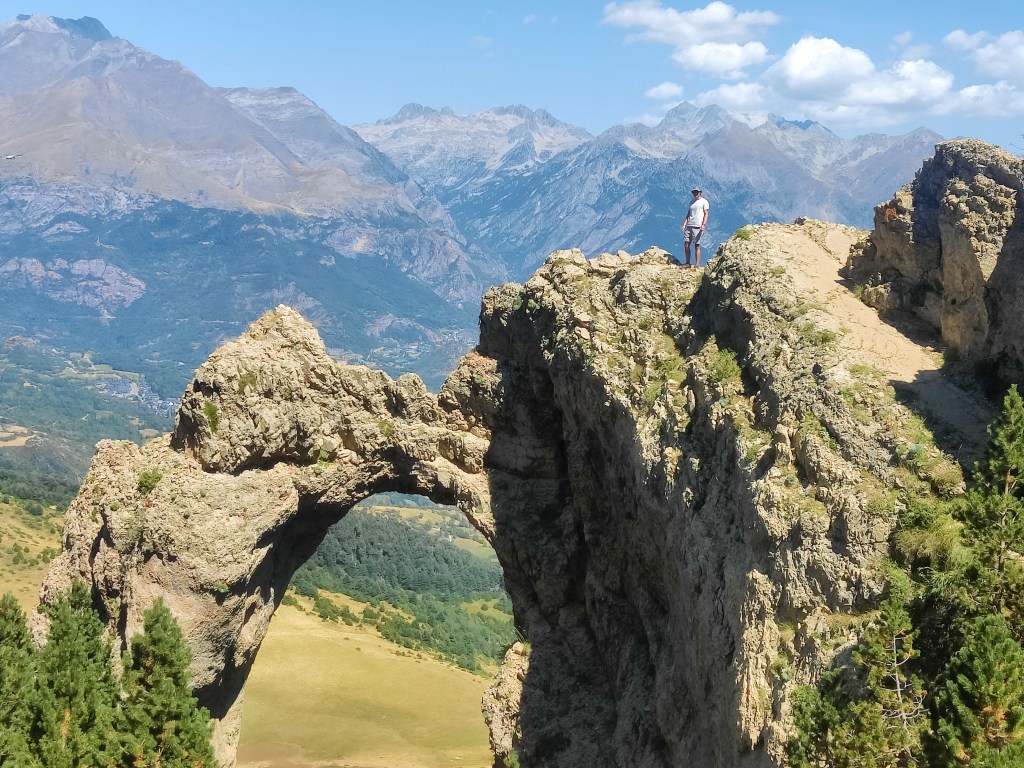
I'm an astronomer currently working at the University of Amsterdam. I was awarded a Marie Curie fellowship
to carry out research on (extreme) accretion onto black holes and neutron stars. I use ground and space-based observatories, such as the Very Large Telescope, NASA's Hubble Space Telescope or ESA's XMM-Newton to test theories and infer the physical properties of these systems. I'm particular interested in quantifying how much energy is produced under this extreme accretion process, and its impact on the interstellar medium.
Born and raised in Catalonia (Spain), I studied theoretical physics at the University of Barcelona. Towards the end of my degree, I had the opportunity to work alongside a group of talented telecommunication engineers in charge of developing the pipeline that would process the raw detections from the Gaia satellite — a satellite launched in 2013 by the European Space Agency — into the final scientific catalogue. During my bachelor thesis, I tested and validated clustering algorithms in charge of grouping together all detections belonging to a single star. That was my first hands-on experience with astronomy, and while I really enjoyed my time at the DPCB, I could see it was too technical for me: I missed thinking more deeply about physics.
After a year working at the DPCB, I enrolled an Erasmus Mundus programme in Space Science and Technology (a.ka. SpaceMaster) that allowed me to study at the Julius Maximilian University of Würzburg (Würzburg, Germany), at the Luleå University of Technology (Kiruna, Sweden) and finally at the Toulouse III – Université Paul Sabatier (Toulouse, France), where I specialized in Astrophysics. It was thanks to this program that I discovered that a) engineering was not my thing (something I already strongly suspected but it was good to confirm) and b) that astrophysics, was my passion. But it was particularly during my master project at the Institut de Recherche en Astrophysique et Planétologie (IRAP) where I truly discovered my devotion, that which I ought to be doing for the rest of my life: research.
I stayed at IRAP for another three years to carry out my PhD thesis, studying some extragalactic enigmatic sources termed Ultraluminous X-ray sources whose nature was (and is still) not entirely clear. You can read about my work and the nature of these systems in two entries in my blog [1,2].

My thesis was awarded the Prix Pierre Maury (category aeronautics, astronomy, and space research) by the Académie des sciences, inscriptions et belles-lettres de Toulouse.
Shortly after finishing, I moved to the UK for a postdoc at the University of Southampton, where I ended up staying almost for four years. During this time, I developed algorithms for the analysis of unevenly-sampled time series — something common in astronomy due to the nature of interrupted observations (day/night cycles, Earth/Moon/Sun occulations, limited observing time, weather, etc) — and continued my research on various aspects of Ultraluminous X-ray sources. For more info on that see Science.
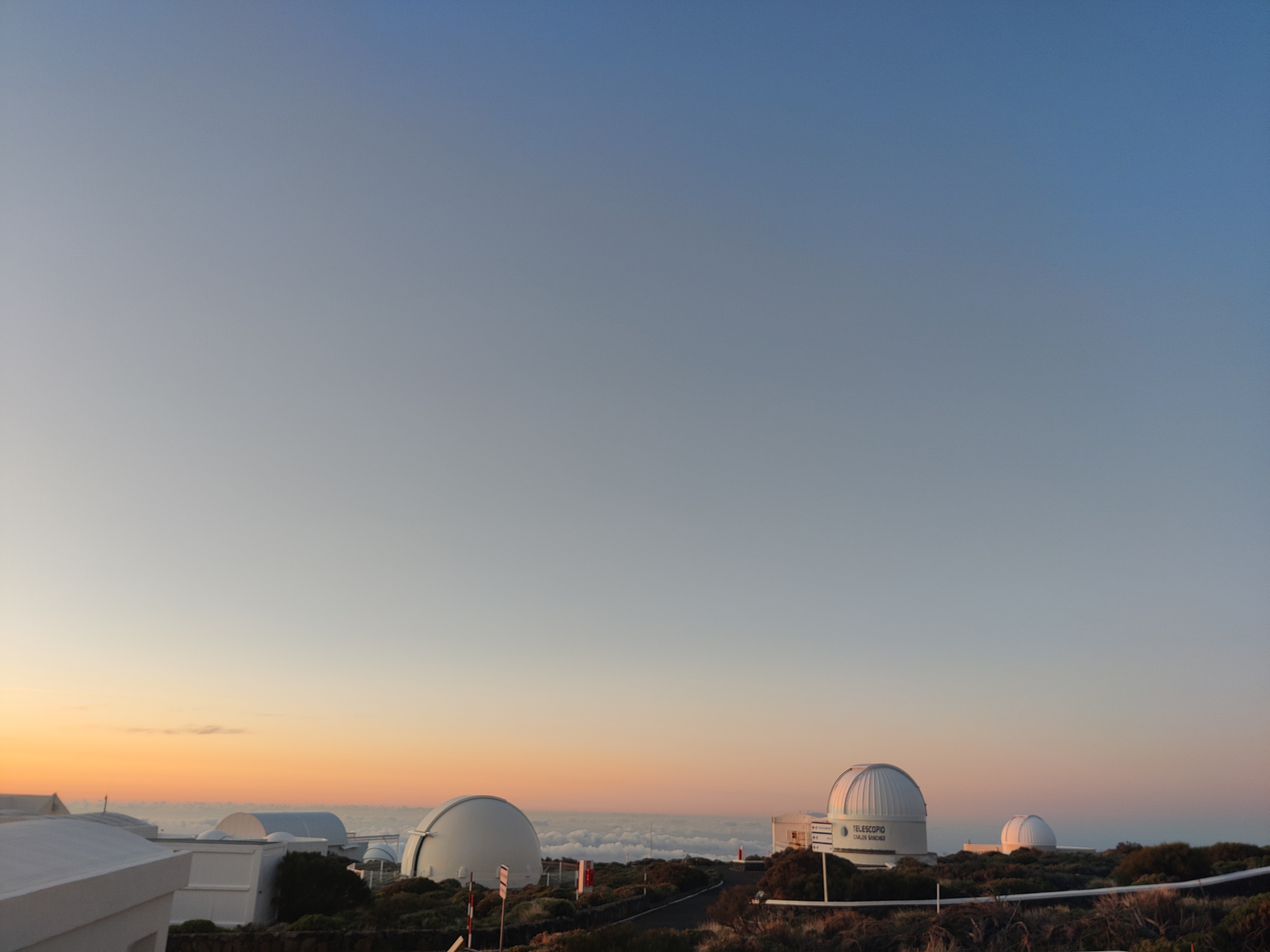
After my first contract at the University of Southampton ended, I was very close to quit academia for good. I love academia, I love the flexibility and autonomy it offers, but the constant job-begging-rejection cycle can grind you down, even if you are motivated. It’s also not easy to build a life if you are constantly moving every two-three years, and it can get tiring in the end. Thankfully, when all had failed and I was ready to quit, I got the incredible news that my Marie Curie fellowship application (which at that stage I had forgotten about and did not really considered a plausible alternative, given that is one of the most competitive fellowships out there, maybe in the world?) had been successful. This meant two more years of funding to do my own research project—determine, using a novel technique, the energy emitted by the accretion process around Ultraluminous X-ray sources and its impact on the environment. I’m carrying this project at the University of Amsterdam, in the Netherlands, at the Anton Pannekoek Institute for Astronomy.
Beyond being a scientist, or as a consequence of being one, I like to think, possibly a bit too much, and to read, possibly at a more normal level. And more and more, writing it all down. Other than that, I like to cook, work out, preferably outdoors, spent time in nature and have hour-long conversation over coffee.