
If you are looking for your next read, the list below might help. It contains all the books I’ve read since circa 2020. Every book is rated and I plan to add a personal commentary to all of them. The first block of text is meant to be spoiler-free. If you expand the text upon clicking on it, you’ll see a more elaborate opinion, but which includes spoilers. There are certain books that I would recommend reading close in time, which are indicated in “Related Reads”. For now, the books are presented in the order I read them.
Thinking, Fast and Slow

Author: Daniel Kahneman
Read: 05-04-20
Category: Non-fiction,Business & Finance,Psychology
Rating:
Related Reads:The Black Swan
Commentary: If you think human beings are rational, this book will shatter that belief. It’ll change the way you think about your own thought process.
Deep Work
Rules for Focused Success in a Distracted World

Author: Carl Newport
Read: 06-05-20
Category: Non-fiction,Management
Rating:
Related Reads:The Shallows
Commentary: Changed the way I approach work.
The Power of the Habit
Why We Do What We Do, and How to Change

Author: Charles Duhigg
Read: 15-07-20
Category: Non-fiction,Health & Well Being, Psychology
Rating:
Related Reads:
Commentary:
Waiting for Godot
A Tragicomedy in Two Acts

Author: Samuel Beckett
Read: 05-08-20
Category: Fiction & Literature,Drama
Rating:
Related Reads:
Commentary:
The Man Who Mistook His Wife for a Hat
And Other Clinical Tales

Author: Oliver Sacks
Read: 25-08-20
Category: Non-fiction,Psychology
Rating:
Related Reads:
Commentary:
The Art of War

Author: Sun Tzu
Read: 15-11-20
Category: Non-fiction,Military,Strategy
Rating:
Related Reads:
Commentary:
The War of the Worlds

Author: H.G. Wells
Read: 30-11-20
Category: Science Fiction
Rating:
Related Reads:
Commentary:
The Republic

Author: Plato
Read: 15-12-20
Category: Non-fiction,Philosophy,Politics
Rating:
Related Reads:
Commentary: There’s just something so profound about reading a book written more than 2,000 years ago and realizing it is still as relevant today as it was when it was written.
Sapiens
A Brief History of Humankind

Author: Yuval Noah Harari
Read: 15-02-21
Category: Non-fiction,World History,Civilization
Rating:
Related Reads:Homo Deus,21 Lessons for the 21st Century
Commentary:
Brave New World
Author: Aldous Huxley
Read: 22-03-21
Category: Science Fiction,Dystopian,Classic
Rating:
Related Reads:Amusing Ourselves to Death
Commentary:.
Amusing Ourselves to Death
Public Discourse in the Age of Show Business

Author: Neil Postman
Read: 01-04-21
Category: Non-fiction,Social Science
Rating:
Related Reads:Brave New World, The Shallows
Commentary: This book was an eye opener for me as it delved on how the TV had reshapen society for the worse, how society is trading entertaining for rationality. Neil Postman makes a very strong case for why Aldous Houxley’s Brave New World view of the modern worls IS the right one. It was the inspiration for my two blogposts about how social media is transorming our society for the worse (I,II).
A Random Walk Down Wall Street
The Time-Tested Strategy for Successful Investing

Author: Burton G. Malkiel
Read: 23-04-21
Category: Non-fiction,Business & Finance
Rating:
Related Reads:The Misbehavior of Markets
Commentary:
The Shallows
What the Internet Is Doing to Our Brains
Author: Nicholas Carr
Read: 12-06-21
Category: Non-fiction,Social Aspects,Technology
Rating:
Related Reads:Amusing Ourselves to Death
Commentary: This book explores how the Internet—and information technology more broadly—has transformed society, our thought processes, and even our brains. I learned a a lot from reading it as it discusses a wide range of topics, from information technology and biology to history, ultimately illustrating how the Internet influences our thinking today, as hinted by the book’s title. I found it to be an extremely interesting and engaging read, and I was very please to see how thoroughly researched the book was. It will undoubtedly shift your perspective on the Internet and your work ethic. I highly recommend it to anyone interested in the topic, which as a daily user of the Internet, you should be. It also formed part of the basis of my posts (I,II) about how social media is fragmenting our concentration.
Of Human Bondage

Author: W. Somerset Maugham
Read: 06-08-21
Category: Fiction & Literature,Classics
Rating:
Related Reads:
Commentary:
The Black Swan
The Impact of the Highly Improbable
Author: Nassim Nicholas Taleb
Read: 01-09-21
Category: Non-fiction,Epistemology,Business & Finance
Rating:
Related Reads:Thinking, Fast and Slow,The Misbehavior of Markets
Commentary: A holistic view on epistemology, touching on statistics, psychology, philosophy, a great read to reflect on how it is that we get to “know” stuff. Potentially even more pertitent, if your job, like mine, is to produce knowledge.
Ready Player One

Author: Ernest Cline
Read: 01-10-21
Category: Science Fiction
Rating:
Related Reads:
Commentary:
The Misbehavior of Markets
A Fractal View of Financial Turbulence

Author: Benoit Mandelbrot & Richard L Hudson
Read: 05-10-21
Category: Non-fiction,Business & Finance
Rating:
Related Reads:A Random Walk Down Wall Street, The Black Swan
Commentary: Simply brilliant. I loved to see fractal theory applied to financial markets. The whole book is about debunking Gaussian statistics applied to financial markets. It is a bit of a technical read, particularly if you are not familiar with terms such as Powerlaw, Gaussian distributions (I’d recommend reading A Random Walk Down Wall Street prior to this one as it makes the reading experience much richer). It was also nice to see how the statistical treatment of financial markets could equally be applied to astronomical sources (correlated noise, powerlaw-fractal power spectra, rednoise, etc).
Children of Time
Author: Adrian Tchaikovsky
Read: 18-12-21
Category: Science Fiction
Rating:
Related Reads:
Commentary: This was a delight to read. The plot is so brilliant and how it touches on so many topics (multi-planetary species, terraforming, the future and history of humankind, AI, biology, the theory of evolution, technology, development language etc) is incredible. One of my favourite science fiction reads of all times, cannot recommend it enough.
Utopia for Realist
And How We Can Get There

Author: Rutger Bregman
Read: 20-12-21
Category: Non-fiction,Political Science
Rating:
Related Reads:Bullshit Jobs
Commentary:
How to Win Friends and Influence People

Author: Dale Carnegie
Read: 10-01-22
Category: Non-fiction,Psychology
Rating:
Related Reads:
Commentary: Nothing revealing, just things we know and are common sense, but it was a good reminder on how to treat (nicely) other people. Like all these self-help books, it is an incredibly easy read. I guess if you are a selfish, egocentric, demon, reading this book might help.
The main takeaway I take is that while we all value “great speakers” no one cares about “great listeners”. Yet often, just sitting there, listening to someone from a place of non-judgimental, pure understanding is the best help we can offer to someone. In brief, it is a reminder to talk less and listen more.
Exhalation
Stories
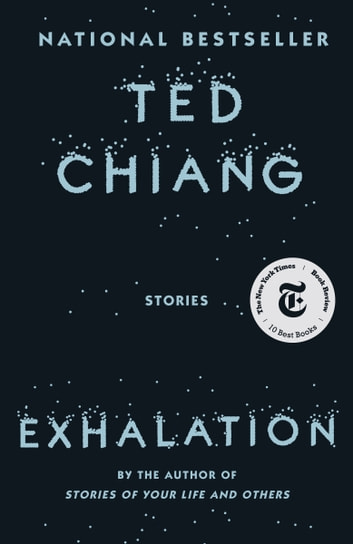
Author: Ted Chiang
Read: 18-02-22
Category: Science Fiction
Rating:
Related Reads:
Commentary:
How to Avoid a Climate Disaster
The Solutions We Have and the Breakthroughs We Need

Author: Bill Gates
Read: 21-02-22
Category: Non-fiction,Economics
Rating:
Related Reads:
Commentary:
Lifespan
Why We Age—and Why We Don’t Have To
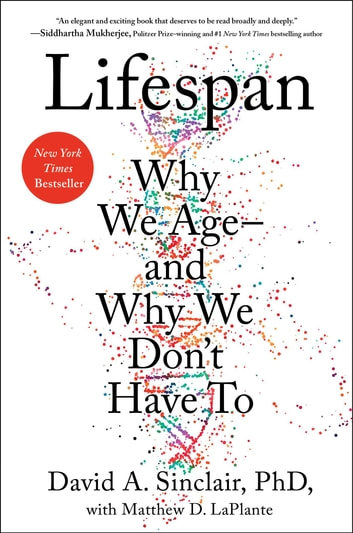
Author: David A. Sinclair & Matthew D. LaPlante
Read: 14-03-22
Category: Non-fiction,Health & Well Being, Genetics, Biological Sciences
Rating:
Related Reads:
Commentary:
I, Robot

Author: Isaac Asimov
Read: 15-06-22
Category: Science Fiction
Rating:
Related Reads:
Commentary:
Unabomber Manifesto
Industrial Society and Its Future

Author: Ted Kaczynski, The Unabomber
Read: 10-08-22
Category: Non-fiction,Political Science,Civilization
Rating:
Related Reads:
Commentary:
Homo Deus
A Brief History of Tomorrow
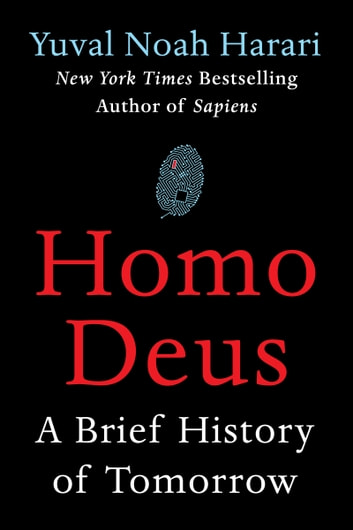
Author: Yuval Noah Harari
Read: 20-08-22
Category: Non-fiction,World History,Civilization,Social Science
Rating:
Related Reads:Sapiens,21 Lessons for the 21st Century
Commentary: This was my favourite book from Yuval, it’s just so spot on and pertinent. It still mesmerizes the way he thinks and how he is able to put things together in such a cohesive manner. The book discusses where humankind is headed and the technological and spiritual challenges it will face moving forward. It will change the way you think.
Caffeine Blues
Wake Up to the Hidden Dangers of America’s #1 Drug

Author: Stephen Cherniske
Read: 18-09-22
Category: Non-fiction,Health & Well Being,Drug Dependence
Rating:
Related Reads:This Is Your Mind On Plants
Commentary:
On Bullshit

Author: Harry G. Frankfurt
Read: 18-09-22
Category: Non-fiction,Philosophy,Social Science
Rating:
Related Reads:
Commentary: Now I know what Bullshit is.
Considering how short the summary of this book can be written, it felt excessively long. I still admire, that someone has taken the time to write an entire book on Bullshit. My two cents: the liar is concerned with the truth, he knows the truth, but he wants to conceal it. The bullshitter on the other hand, doesn’t care about the truth, what he wants is to shatter any rational debate, anything having to do with a discussion on what is true. Trump is THE perfect example of a bullshitter, it doesn’t matter whether what he says is right or wrong, if in fact it doesn’t even matter if you PROVE him wrong, he is not interested on the truth, but on shattering any debate grounded in truth.
This Is Your Mind On Plants
Opium—Caffeine—Mescaline

Author: Michael Pollan
Read: 27-09-22
Category: Non-fiction,Biological Sciences,Social Science
Rating:
Related Reads:Caffeine Blues
Commentary: From the book title, I was expecting to learn about the brain biochemistry when under the influence of certain drugs. Instead, the book is mostly an historical recount of how or why opium, caffeine and mescaline came to be perceived in society the way they are perceived today, or rather, a well-researched account of the sociological context surrounding the use of these drugs. Don’t get me wrong, it was still a great read and learned a lot from it and I loved the way Michael Pollan explained the opium wars, the history of coffee and the strange legal and cultural dynamics around mescaline, but because it did not match my expectation, I was a bit disappointed by it.
The whole opium ordeal and how at some point in the history of the US you could get incarcerated for having poppies in your garden was brilliant. I had no idea you could make essentially “opium” tea from poppies (!) I was also fascinated by the whole history of coffee and how it can be argued that it helped humankind leave behind the dark ages, as coffee offered an alternative to beer, which spurred rationality and intellectualism instead of, well, stupidity I guess. I absolutely loved reading about Honoré de Blazac and Voltaire’s coffee addiction. This paragraph of Balzac made the whole coffee chapter for me:
“I have discovered a horrible, rather brutal method that I recommend only to men of excessive vigor, men with thick black hair and skin covered with liver spots, men with big square hands and legs shaped like bowling pins. It is a question of using finely pulverized, dense coffee, cold and anhydrous, consumed on an empty stomach. This coffee falls into your stomach, a sack whose velvety interior is lined with tapestries of suckers and papillae. The coffee finds nothing else in the sack, and so it attacks these delicate and voluptuous linings; it acts like a food and demands digestive juices; it wrings and twists the stomach for these juices, appealing as a pythoness appeals to her god; it brutalizes these beautiful stomach linings as a wagon master abuses ponies; the plexus becomes inflamed; sparks shoot all the way up to the brain. From that moment on, everything becomes agitated. Ideas quick-march into motion like battalions of a grand army to its legendary fighting ground, and the battle rages. Memories charge in, bright flags on high; the cavalry of metaphor deploys with a magnificent gallop; the artillery of logic rushes up with clattering wagons and cartridges; on imagination’s orders, sharpshooters sight and fire; forms and shapes and characters rear up; the paper is spread with ink – for the nightly labor begins and ends with torrents of this black water, as a battle opens and concludes with black powder.”
Why We Sleep
The New Science of Sleep and Dreams

Author: Matthew Walker
Read: 20-12-22
Category: Non-fiction,Health & Well Being,Psychology
Rating:
Related Reads:
Commentary:
Dune
Book One in the Dune Chronicles

Author: Frank Herbert
Read: 02-02-23
Category: Science Fiction
Rating:
Related Reads:
Commentary:
Noise
A Flaw in Human Judgement

Author: Daniel Kahneman, Olivier Sibony & Cass R. Sunstein
Read: 15-09-23
Category: Non-fiction,Psychology
Rating:
Related Reads:Thinking, Fast and Slow
Commentary: It can be argued this book follows his famous Thinking, Fast and Slow, as it also centres on human cognitive biases, but in this case as to how we make what the authors call “judgements” — things like sentencing someone, forecasting prices in the stock market or hiring decisions (i.e. effectively forecasting future performance). It discusses how judges will judge differently depending on personal biases, weather, mood, or even when presented the same cases twice, etc, how to evaluate the quality of judgements and reduced biases and dispersion on them, both at a personal level and for businesses. I very much liked the discussion centred around using rules and/or algorithms to reduce the arbitrariness of some judgements. It is an interesting read on the topic, with some interesting application to our everyday life, but I wasn’t as pleased as with his previous book.
One thing I take away is how the brain is a “judgement” machine and how we seem to assign arbitrary and variable weights to different qualities when making a judgement. He discusses how a simple model based on constant weights tuned to maximize success (say after having evaluated the 2yr performance of 5 candidates, you calibrate a simple, constant-weighting model on various of their qualities) will perform better than pretty much any human. However, if I understood correctly, I find this whole argument a bit flawed since obviously the model operates in hindsight. Nevertheless, it is an interesting piece of advice to consider. I also wondered, or was puzzled, how he describes a population of superforescasters, but obviously if you pick a group of people and take out those that predicted the best, you’ll get seemingly good forecasters (outliers) by chance (e.g. potentially a Warren Buffer). In any case, he suggest to be a good forecaster you need to be able to change your mind when faced with new data (be open minded to new info). Another good piece of advice to average judgments from individuals or even from two judgements from the same person spaced in time, better if they have different backgrounds, because their average will tend to be a better judgement (the famous the wisdom of the fools or wisdom within), to focus on “ranking”, than giving absolute scales and to think about the statistical or ensemble rather than the precise (i.e. how long you reckon a CEO with this profile will last in a company –> better answered thinking how long do CEOs last on average in a company). He also discusses the distinction between forecasts we can check (stock prices) and those cannot (sentencing) and guidelines to evaluate both. How forecasting should assign probabilities (i.e. apple will go up with 60% probability) as otherwise the quality of the forecasting cannot be evaluated. To reduced biases or dispersion in judgment by different people, rules or algorithms can be implemented. I really liked how the conversation suddenly revolved pretty much around the idea of free will. In brief, nice discussion on a very niche topic, with some things that I’d like to see further explained (models trained in hindsight and superforecasters).
Merchants of Doubt
How a Handful of Scientists Obscured the Truth on Issues from Tobacco Smoke to Global Warming
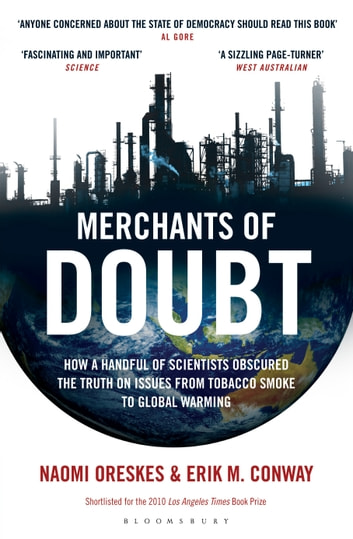
Author: Naomi Oreskes & Mr Erik M. Conway
Read: 30-09-23
Category: Non-fiction,Epistemology,Science
Rating:
Related Reads:
Commentary: The book explores five historical instances—tobacco smoking, climate change, DDT, acid rain, and the ozone hole—where large corporations have attempted to obscure the truth from the public, despite clear scientific evidence of the harms caused by these issues. It delves into the strategies and tactics these corporations, often in collaboration with once-respected scientists, used to conceal the truth about these health and environmental problems, as well as their impact on political economics. The book concludes with an excellent analysis of how modern science establishes “what we know” and what it truly means for science to “know something”—a concept that can often seem alien to the general public. It is thoroughly researched and provides a compelling discussion on the topic.
I particularly appreciated the epistemological discussion on how modern science builds knowledge, not from a single discovery, but through the gradual accumulation of evidence and the formation of scientific consensus—an approach that the general public often struggles to understand. Additionally, the book effectively demonstrates how unregulated markets, which supposedly regulate themselves to ensure optimal resource allocation, have failed us, especially regarding environmental issues that lie outside this system. It clearly shows the necessity of government regulation to reintegrate the environment into the capitalistic equation.
Show Your Work!

Author: Austin Kleon
Read: 17-11-23
Category: Non-fiction,Creativity
Rating:
Related Reads:
Commentary:
Infinite Jest

Author: David Foster Wallace
Read: 28-12-23
Category: Fiction,Humorous
Rating:
Related Reads:
Commentary: There are some truly great passages in the book — Where was the woman who said she’d come — but overall I felt whatever amount of time I spent reading this massive block was not worth the “reward”.
I think having read how much of a “masterpiece” this book was and the initial setting of the novel, I was expecting some incredible story, which kept me reading, and reading and reading, but in the end this masterpiece ending or “wow” moment never came. In fact much of the story is left rather open, which made the entire experience a bit disappointing. Nevertheless, as I said there are some truly genius passages in it, in fact one particular passage was the inspiration for this story. Does that make it worth the entire read? Not in my opinion.
The Alchemist

Author: Paulo Cohelo
Read: 10-01-24
Category: Fiction & Literature,Classics
Rating:
Related Reads:
Commentary:
Visual Social Media Cultures

Author: Tama Leaver, Tim Highfield & Crystal Abidin
Read: 15-02-24
Category: Non-fiction,Social Science
Rating:
Related Reads:
Commentary: A deep analysis on everything Instagram — from the app to the whole ecosystem around it. The book discusses Instagram’s history and many of the “subcultures” formed within it. There are some interesting ideas and it makes you reflect on how people used the tool, but I was a bit disappointed as the book doesn’t discuss at all the psychological tricks used by the app to hook user (like dopamine spikes and addiction). I also found it way too “factual”; I almost missed some subjectivity or more opinionated arguments. Even “factual” arguments were sometimes presented as “we argue” i.e. “we argue users co-create each other”, well that is a fact (an interesting one) rather than an argument. Unless you are dying to know every detail about the history of Instagram and how users interact with it from a cultural point of view, I wouldn’t recommend it.
21 Lessons for the 21st Century

The Three Body Problem
Book 1 – The Three-Body Problem Series

Author: Cixin Liu
Read: 03-03-24
Category: Science Fiction
Rating:
Related Reads:The Dark Forest, Death’s End
Commentary:
Skin in the Game
Hidden Asymmetries in Daily Life

Author: Nassim Nicholas Taleb
Read: 15-03-24
Category: Non-fiction,Epistemology,Business & Finance
Rating:
Related Reads:The Black Swan
Commentary:
The Dark Forest
Book 2 – The Three-Body Problem Series

Author: Cixin Liu
Read: 01-05-24
Category: Science Fiction
Rating:
Related Reads:The Three Body Problem, Death’s End
Commentary:
The Glass Cage
How Our Computers Are Changing Us
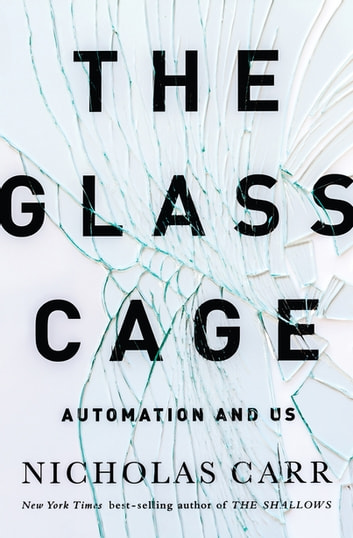
Author: Nicholas Carr
Read: 20-06-24
Category: Non-fiction,Social Aspects,Technology
Rating:
Related Reads:
Commentary:
L’Anomalie
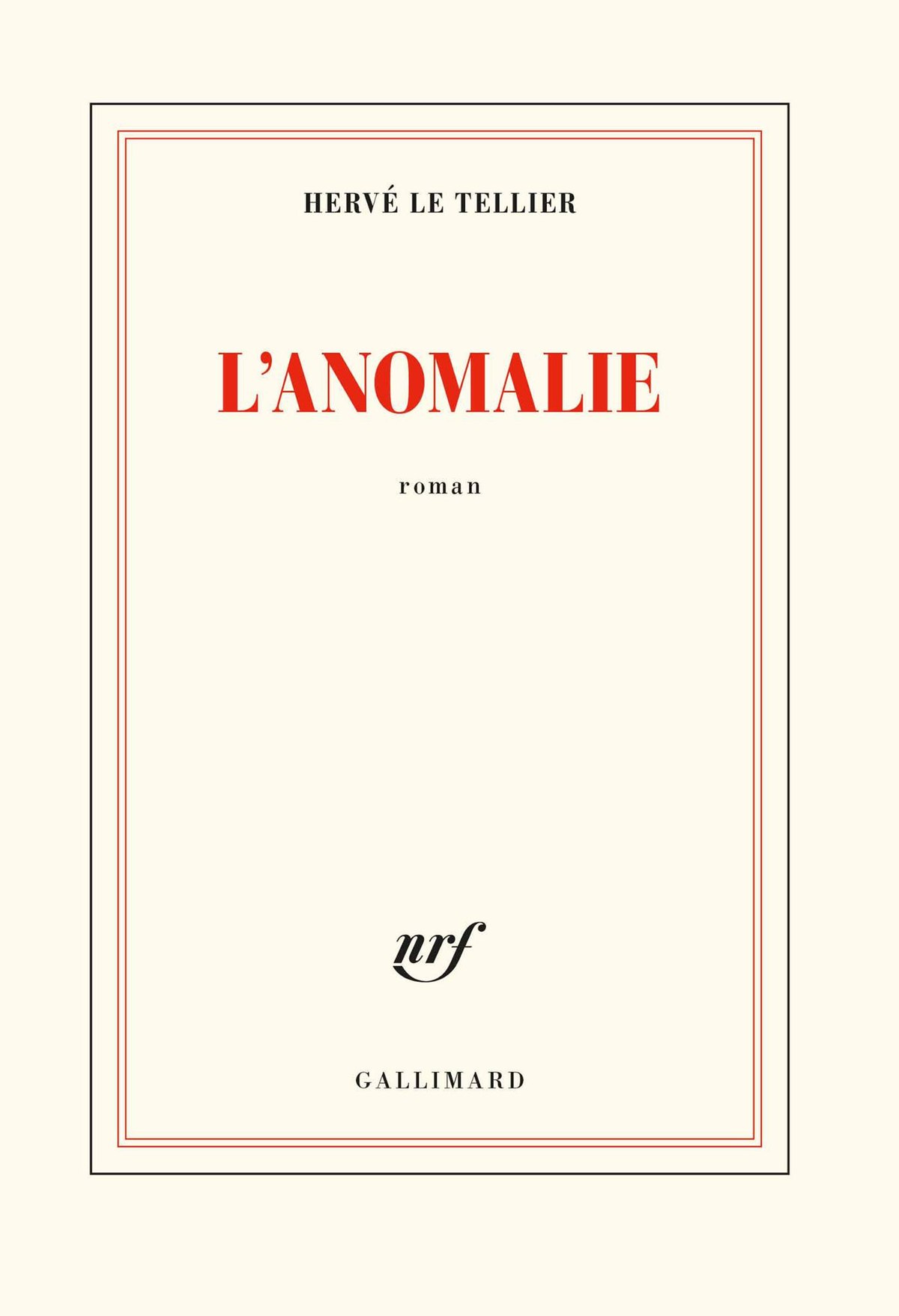
Author: Hervé Le Tellier
Read: 01-08-24
Category: Science Fiction
Rating:
Related Reads:
Commentary: A weird phenomenon (the anomaly) causes the same plane (same flight number, plane model, passengers, pilot, etc) to appear again after 3 months the first plane landed originally. Quite original style and plot and a very straightforward way of writing. Loved the way he incorporates modern events and ideas into the plot.
Really enjoyed to see many modern philosophical ideas about the fabric of reality (e.g. the simulation hypothesis) being discussed in the book.
Bullshit Jobs
A Theory

Author: David Graeber
Read: 02-08-24
Category: Non-fiction,Social Science,Business & Finance
Rating:
Related Reads:Utopia for Realist, Technofeudalism
Commentary: What I loved the most about this book is that it discusses such an important, yet unreported topic, of our modern society: that apparently there’s a huge fraction of society forced to spend most of their waking hours in jobs which fulfill no real purpose, jobs that exist for absurd reasons and that whoever is employed in them feel are pointless, useless or even detrimental to society. At the very least I had never come across any piece of media or other books discussing this issue, so it was very nice to learn about a completely new topic. The very beginning of the book is probably the best, when he outlines what types of pointless jobs that exist in our society, with actual testimonies and how they can be classified into these 5 categories. Then the book becomes more serious and goes into lengths to discuss how we have come to this situation, why we find the need to ‘force’ people into work hard and what to do about it. In that regard it was nice to read such a lengthy and thorough discussion of the topic. He does make very good and convincing points which I found to be very accurate. I found however the book rather lengthy and written in a rather convoluted way, sometimes going on a tangential, mostly irrelevant rant which in my opinion makes the book excessively long. Nevertheless, the first few chapters, where he exposes testimonial recounts of bullshit jobs and the various categories of bullshit jobs is just brilliant.
I found appalling that about 35% (or more) of society is working at something they feel is useless. I found the case he makes as to how we’ve arrived to this situation quite convincing. Despite automatization, which should made a lot of jobs redundant and freed more time for everyone, leading to this predicted massive unemployment, we somehow have managed to create a society where it seems more acceptable to just keep everyone busy and miserable, regardless of whether there’s something of use for them to do. It has become inconceivable to just have people sitting idle or relaxing because we have all drilled in our minds (culturally or by religion) that we ought not only to “work”, but to “work hard”. Interestingly, both leftist or rightist fall for this: “it is through hard work that I built this company”, “the hard-working haven’t had a pay rise since”. He takes a strong stance against capitalism showing how despite living in a capitalistic society — which should remove inefficiencies to maximize profits by efficient resource allocation — we have arrived at this situation. I also think he makes a very convincing case for universal basic income.
Technofeudalism
What Killed Capitalism

Author: Yanis Varoufakis
Read: 13-08-24
Category: Non-fiction,Business & Finance
Rating:
Related Reads:The Wealth of Nations, The Communist Manifesto, Bullshit Jobs
Commentary: The book offers some great insights into the workings of our modern economy, increasingly reliant on digital platforms that, like old-style fiefs, charge fees for using their ecosystems. The book is relatively easy to follow, with considerable effort made to make it accessible to non-experts. However, I felt the author often digresses from the main thesis, even devoting little time to making his primary points, which were sometimes inadequately justified. It felt like three or four good ideas that could have been summarized in about 10 pages were stretched into a full book. For this same reason, it’s a very quick and easy read.
I found his analysis of modern capitalism—morphed into what he calls “technofeudalism,” where cloud rent has replaced profits—quite enlightening, offering a fresh perspective on contemporary economics. His exploration of how feudalism relied on rent, capitalism on profits, and how we are now returning to a rent-based system was particularly insightful. He’s spot on in observing that many digital platforms have created “ecosystems” where their revenue comes simply from charging fees every time we sell, post, pay, or engage in other activities on their platforms, much like paying a toll on a highway. The Internet, once a borderless democratic platform promising to liberate and empower individuals, is now increasingly dominated by a few large corporations, whose business model is to take a cut from every remaining form of traditional capitalist business. For instance, Amazon takes a percentage from every seller on its platform, or Apple charges 30% per transaction in its App Store. The problem is that in many cases, their market dominance means competition is almost non-existent, leaving us with no choice but to surrender to these corporate fiefs. This problem will only worsen as the economy becomes more dependent on digital platforms. For example, peer-to-peer payments, which used to be “free” (cash), now rely on VISA/MASTERCARD networks, which take a cut of every transaction. The book also touches on the issue of personal data gathering by companies like Facebook and Amazon. The author argues that these companies are collecting as much data as possible to sell us products later, or in many cases, the company gathering the data is the same one selling us the products (Amazon being a prime example). While this isn’t new, he takes it a step further by suggesting that these companies use AI algorithms to modify our behaviour to increase consumption. While I agree with his analysis (once this became crystal clear to me when a friend received a notification from Uber Eats suggesting him to order dinner as soon as he sat on his Uber), I found it somewhat shallow. If we are going to discuss behaviour-modification algorithms, we should first address whether we make conscious decisions at all. So yes, we’re being monitored, our data being sold, and products marketed to us based on our behaviour, but whether these companies are crossing the line into actually modifying our behaviour is a discussion in itself. Are they modifying or simply anticipating our behaviour? If my friend orders food after receiving a notification from Uber Eats, did he genuinely want the food, or did the app just offer what he wanted? In brief, I found not discussing these aspects a bit flawed. The author also discusses how these algorithms are replacing traditional “marketing” experts, who used to repackage simple products as “experiences”—turning a functional item like a purse into a status symbol meant to make someone feel special, unique, or luxurious. It was interesting to revisit an idea I first encountered in Bullshit Jobs: that capitalism, having moved beyond meeting demand, is now focused on generating it, hence the growth of all these marketing departments. Now because AI algorithms know more about us — and might even predict or modify our behavior—are effectively automating this process and replacing marketing gurus. I found this aspect of the book intriguing.
On another note, I felt this was one of those books that could have been summarized in a blog post or a few pages. In fact, the author devotes little time to his main thesis and doesn’t provide many examples of “cloud fiefs.” Some arguments are not well-developed or are poorly explained, such as why cryptocurrencies, which allow transaction-free direct peer-to-peer transactions, are not a viable solution to bypass the financial cloud fiefs. The chapter ends with the question, “But before any of this becomes remotely possible, we need to answer the most pressing of questions: What is the alternative to technofeudalism?” I found this rhetorical style often irritating. The author frequently uses grandiose constructions (like “mega-rich ultra-powerful big corporations”) that felt superfluous in many instances (and gave me the ChatGPT vibes). He also tends to write overly convoluted sentences, such as, “In the shadow of this New Cold War, the best we can now hope for are two separate green transitions, one in each super cloud fief—a bifurcation of the global green agenda, which, I fear, will play into the hands of fossil fuel conglomerates who will find ways to play one off against the other, allowing them to keep drilling.” Many sentences were unnecessarily complex. He also tends to pose this rhetorical questions (like the one above), which in many instances came out of the blue, in an attempt (I guess?) to sort of build up the tension, but that felt super forced in many instances. Get to the point Mr. Varoufakis. The book is also quite disorganized. The author discusses aspects of his thesis only to say, “but I will discuss this in length in Chapter X.” Why not address it thoroughly right there? It felt like he was trying to stretch the book out. I lost count of how many times I was reminded that we moved from feudalism to capitalism, which culminated in the 2008 crash when the economy became sustained by money printing rather than profits. It felt like I was reading the same ideas repeatedly. There was constant repetition of certain points, many of which had little to do with the central thesis. For example, I suddenly found myself reading about China/U.S. economic relations in the 90s for far too long. Overall, I found there was lot of fluff and unnecessary discussion about geopolitics and economic history not so relevant for the main topic.
Death’s End
Book 3 – The Three-Body Problem

Author: Cixin Liu
Read: 15-10-24
Category: Science Fiction
Rating:
Related Reads:The Three Body Problem, The Dark Forest
Commentary: While I really enjoyed the entire trilogy and this book as well, this one felt a bit “too much”. If there’s something that makes science-fiction great, it’s its plausibility, but here I felt Cixin Liu stretched it too far and while still a great read, I did not enjoy it as much as the other books.
Alice’s Adventures in Wonderland and Through the Looking Glass

Author: Lewis Carroll
Read: 20-11-24
Category: Classic, Fantasy, Fiction & Literature
Rating:
Related Reads:
Commentary: Turns out Tim’s Burton adaption of Alice’s Adventures in Wonderland is so good that reading the first of Alice Adventures was almost disappointing. I felt unable to appreciate the true beauty of it, because the characters and magical transitions were just not as appealing in plain written text as in the movie. In fact one wonders how Tim came up with all this detail representation of the characters as the book scarcely provide such rich descriptions (Chesire the cat or the iconic caterpillar smoking a hookah come to mind). Thankfully though, I could appreciate Lewis’ Carroll masterpiece in reading Through the Looking Glass as I had no pre-conception of the story and this truly felt like reading Alice in Wonderland with a fresh mind. I would say Through the Looking Glass has the same fairyness and magical aura that makes Alice in Wonderland so great.
In the end, what you realize is that many of the dialogues are just a play on words, reflecting on how many of our everyday expressions take for granted the speaker intentions, without reflecting on the true, literal meaning of the words. I found particularly amusing the dialogue between the Knight and Alice, when discussing over the name of a song:
The name of the song is called ‘Haddocks’ Eyes’.”
“Oh, that’s the name of the song, is it?” Alice said, trying to feel interested.
“No, you don’t understand,” the Knight said, looking a little vexed.
“That’s what the name is called. The name really is ‘The Aged Aged Man’.”
“Then I ought to have said ‘That’s what the song is called’?” Alice corrected herself.
“No, you oughtn’t: that’s quite another thing! The song is called ‘Ways And Means’: but that’s only what it’s called, you know!”
“Well, what is the song, then?” said Alice, who was by this time completely bewildered.
“I was coming to that,” the Knight said. “The song really is ‘A-sitting On A Gate’: and the tune’s my own invention.”
Most of us would have considered “What is the song called?” or “What is the name of the song?” to be the same question, but here Lewis is playing upon the fact that taken literally these constructions can be interpreted differently. This is the gist behind most dialogues in the book, and what makes them so amusing.
In passing, I will say it was disheartening to learn that Lewis Carroll (or Charles Dodgson) had a weird fetish with little children (specially girls) and liked to photograph them with as little clothing as possible in other words, which he was, potentially, a paedophile.
SALT,FAT,ACID,HEAT
Mastering the Elements of Good Cooking

Author: Samin Nosrat
Read: 15-01-25
Category: Non-fiction,Food & Drink
Rating:
Related Reads:
Commentary: This book took my cooking to the next level. I already liked cooking quite a lot but I always wanted to know more about the ‘science’ of cooking to make better decision when it comes to cooking. The problem with most recipe books is that they never provide the why we do things the way we do them. This book instead goes to the root and explains the foundation of cooking (through salt, fat, acid and heat) so you can then make better decisions in your kitchen. The science is arguably basic but more than enough to get you to the next level (in the end cooking is not so complicated). The recipes at the end of the book are also outstanding. Highly recommend it if you are looking to take your cooking skills to the next level.
Meditations

Author: Marcus Aurelius
Read: 23-01-25
Category: Non-Fiction,Religion & Spirituality,Philosophy
Rating:
Related Reads:
Commentary: No doubt Marcus Aurelius (MC) was a genius; he had a deep understanding of the Universe without (I assume) any formation in physics nor the scientific method. Despite having been written about 2,000 years ago, the book is incredibly powerful and pertinent still today, as Meditations is an invitation to reflect upon the most fundamental aspects of our existence: life, death, and about what it means to be human. What I admire the most about MC (and I guess about any good stoic) is his mental resilience; in a time in which everyone is suffering with crippling mental health problems, no doubt many will benefit from MC teachings, although I recognize the book can be a bit distressing — I myself had to put it down at time (although I was arguably going through a rough time); MC paints quite a disheartening picture of life in which we are mere atoms passing through an ever-changing and pre-determined Universe, a Universe in which matter is constantly being destroyed and mixed so new things can grown again (not that I disagree). Nevertheless, everyone would benefit from learning a thing or two about stoicism, because it can truly help us find more calm despite the external circumstances or our own meaningless and brief existence. I particularly liked the beautiful analogies MC makes with nature when developing his ideas; no doubt MC was a good observer.
Much of Marco Aurelius wisdom lies in reminding ourselves of our insignificant existence, a blink in an endless Universe, a speck of dust in an infinite space. But instead of falling into dispair, MC encourages us to let go, to not worry and lose ourselves in futile endevours of fame and pleaseure, because after all we will end up in oblivion. I hadn’t realized how stoicism is surprisingly similar to Budhism or oriental teachings, in that it invites us to observe the mind and its movements, and reflect upon the fact that it is not the external environment which causes us harm, but our own mind’s reaction TO them. MC invites to see external events as a stone sees rain falling onto it, things as they are, neither good or bad. In brief, MC invites us to take an observer perspective in life, rather than a protagonist.
The Time Machine

Author: H.G. Wells
Read: 28-01-25
Category: Science Fiction
Rating:
Related Reads:
Commentary: A time traveller into a future where social inequality has lead to two humanly distinct species. Interesting book although I’ve read much deeper and interesting sci-fi stories.
Anxiety
Panicking about Panic

Author: Joshua Fletcher
Read: 02-02-25
Category: Nonfiction, Health & Well Being, Medical, Ailments & Diseases, Mental Health
Rating:
Related Reads:
Commentary: While I was already overcoming my anxiety, I know that if I had found this book when my mind started to go haywire it would have saved me months of mental suffering. The book is super easy to read and an immense help to understand what anxiety is, all the weird symptoms it can make you experience, but at the end of the day, how simple it is. There is also many practical and effective advices on how to get rid of it — although the latter might not be that straightforward, for me it was because I had already understood the gist of it and how to operate to get rid of it. What I already suspected is that the best psychologist is not necessarily a trained professional, but someone who has gone through the process already, as they will have acquired a much deeper understanding of the topic than what a professional can read on a textbook (although in fairness Joshua IS a trained professional, but I’m not sure he was at the time of writing). In any case, if you suffer from anxiety, this book will be immensely helpful.
I think there are few key pieces to understand about anxiety laid out in the book:
1) All your ailments are not a collection of different diseases, but just one and only one thing: anxiety. Understand this, and the problem becomes extremely manageable. Anxiety will convince you that you have the most weird of things (or multiple of them) when in reality is just one of the many forms anxiety can manifest into. This are just the results of our anxious mind looking for fabricated answers to a non-existing problem or becoming oversenstive in scanning our own bodies. It is very hard to fight many weird and diverse symptomatology, but battling anxiety is simple. At the end of the day, anxiety is very simple.
2) Lose the “What if”, what if I have a panic attack? What if I go crazy? What if my heart stops beating? and so on… These thoughts are coming from an anxious mind, simply ignore them. But how to tell if one of these is actually a useful thought? Compare your anxious thought with your thoughts prior to anxiety. If that thought was not there earlier, chances are you are just panicking about an irrational fear.
3) Forget about anxiety and keep doing the usual things, keep your mind busy and slowly the times where you “feel normal” will just expand, and over time, all that will remain is normality, your previous self with its thought process.
I had already experienced many of these things but it was reassuring to see them laid out. It also helped me a lot to see that many of the “symptoms” I was experiencing were just, well, anxiety, and not some fabricated physical/mental disease.
Nexus
A Brief History of Information Networks from the Stone Age to AI

Author: Yuval Noah Harari
Read: 02-03-25
Category: Non-fiction, History, Civilization
Rating:
Related Reads:Homo Deus, Sapiens, 21 Lessons for the 21st Century
Commentary: It amazes me the capacity of Harari to connect the dots. This is a discussion on the relationship between information and truth in our societies, how information/technology has shaped our governments throughout the years and the possible ways AI is going to impact the balance between truth and order. I think the whole Chapter 1 is just brilliant. However, I found Chapter 2 laclkluster, lacking the depth I was used to from his previous books and that I so much loved in e.g. Homo Deus. Chapter 2 felt more like a collection of random ideas, without fully developing them or arriving at a conclusion. Many also felt like a copy paste from other texts. But in any case, it is a very interesting read for anyone concerned about how AI will impact our democracies/dictatorships.
I think Harari is on point on the main theme of the book, which is that more information does not lead to truth. Anyone trying to convince a flatEarther will agree with that and it underscores one the main challenges of our society, which is to agree on global issues such as climate change. I think his reading of what constitutes a “democracy” is on point. I always thought that besides having elections, being able to tweet “fuck the president” is key to a democracy. His analogy between the USSR kulaks and the witch hunting in medieval Europe is superb and illustrates perfectly his point: “More information does not lead to truth”. The book also made me reflect on the role of bots contaminating our infosphere, something I also discussed in my blog , and an easy solution which I had not thought of is to ban AI impersonification, which I think should be the case. However, as he discusses, if spam has shown us anything, is that AI won’t be that big of an issue in terms of misinformation (at least until we catch). This same problem already happened with email and spam, and today 99% of the spam is correctly classified. Meaning you can always police AI with AI, so AI bots spreading misinformation or polluting our infosphere is in all likelihood a transitory problem.
However, I was a bit disappointment on other aspects. For instance, I found he exaggerates the role of ChatGPT-4 in managing to lure a worker on TaskRabbit online to solve a Captach on its behalf. Turns out the story is much less surprising and there was a lot more human involvement than portrayed in the book (see link). In a book discussing the relationship between information and truth, I was expecting more, although perhaps ironically this validates his point. I also felt some of his arguments concerning AI were too reductionists. For instance, he argues that with regards to AI, data is everything and that whoever has more data wins (“more data = better AI”). Yet if DeepSeek has made something plainly obvious is that the AI architecture/training is as important if not MORE important than having vast amounts of data. Moreover, in many settings e.g. autonomous driving, current algorithms have already plateaued, despite having access to vast amounts of data. The limitation here probably being either the need for more/better sensors (i.e. OTHER type of data, not just “more”) or a fundamental change in the approach we take to solve autonomous driving. He also makes the point about governments or whoever having an AI overlord ruling us all, but the reality is looking more like a bunch of open source implementations, meaning AI will be free for all and it’ll be hard for private companies to maybe even make a profit out of them(!).
The Handmaid’s Tale

Author: Margaret Atwood
Read: 05-05-25
Category: Fiction & Literature
Rating:
Related Reads:
Commentary: A dystopian, patriarchal future where fertile women are forced as surrogate women for the elite. The novel touches upon a great variety of topics, including, history, politics, social classes, women’s rights, religion, gender division, etc. I also particularly liked Artwood’s writing style. It is also very accessible read, highly recommend it.
Freakonomics
A Rogue Economist Explores the Hidden Side of Everything

Author: Steven D. Levitt & Stephen J Dubner
Read: 08-05-25
Category: Non-fiction, Finance, Economy, Sociology
Rating:
Related Reads:Thinking, Fast and Slow, The Black Swan
Commentary: What this books lays out quite clearly, although controversially, is that economics is the study of incentives, or rather of human behaviour as governed by incentives. I largely agree with this premise of the book and I think it makes a good case for it. Possibly what I liked the most is the idea of observing the world through incentives, and how increasing one (e.g. economic) is not always the most effective way to instigate action, as you may inadvertently be diminishing the power of another one (e.g. moral). What this causes is a plethora of unexpected outcomes (what Taleb would call “non-linear secondary effects”). A case in point is blood donations, which as of now are free and rely on the moral incentive. A study found that if a payout (monetary incentive) was given in exchange, blood donations diminished. Why? Because appending a monetary incentive to an action largely driven by moral incentives diminished the value of the latter, causing people to deem the monetary compensation insufficient. And while increasing the payout seems the obvious thing to do here, this would bring a whole new set of incentives for bad actors to commit fraud, robbery and so on.
The book describes some seemingly unrelated circumstances or questions where outcomes which defy conventional wisdom can be explained under this framework of incentives. The book makes a compelling case for empiricism and against relying on conventional wisdom, which in a way echoes many of Taleb’s works (e.g. The Black Swan). It’s an ok read if you are interested in sociology and human behaviour. As a scientists, I was also delighted to read about Steve D. Levitt genius. In essence, another takeaway was that SDL, is a master at framing a question and devise an experiment to answer it, which in economics, boils down to finding the right dataset and extracting the relevant information from it (what SDL calls gaming the data or something along those lines). This is in spirit what any good scientist should strive for and as such I feel there was quite a bit to learn from Steve.
David & Goliath
Underdogs, Misfits and the Art of Battling Giants

Author: Malcom Gladwell
Read: 20-05-25
Category: Non-fiction, Psychology, Social Science
Rating:
Related Reads:
Commentary: I had heard to talk a lot about Malcom Gladwell and as the first book I read from him, I can understand why. He is no doubt a master story teller and with a touch of science, he weaves together very convincing arguments for seemingly unconventional ideas. I liked the main thesis of the book which is that sometimes, disadvantages can become advantages (what he calls desirable disadvantages) or even that the word “disadvantage” does not have a clear cut meaning because, most things in the world have an inverted “U” response (his example of the struggle of self-made millionaires to inculcate a hard-working culture to their kids is just spot on). I found his ideas refreshing and enlightening (this “aha” moment) although at times the the book felt overstretched; some of the stories included to bring his points home were not that relevant or overly forced into his main thesis, or they were not that relevant or not that good of an example in my view. He is no doubt a master story teller and has a very good writing style. Overall I found his book good excellent food for thought, refreshing, and I certainly would like to read more from him.
I recently found a perfect example what Malcom calls “the advantage of the disadvantages” in this interview to Mathematician Edward Frenklen. Even himself acknowledges that the fact that he was (unfairly) rejected to Moscow State University “supercharged” him to do mathematics at the highest level, and that if it wasn’t for that rejection, he might have not done it. A perfect example of how something seemingly disadvantageous, can turn out to be an advantage. The whole interview is just brilliant btw.
2001
A Space Odyssey

Author: Arthur C. Clarke
Read: 29-05-25
Category: Science Fiction
Rating:
Related Reads:Children of Time, The Three Body Problem
Commentary: Great classic still very much in vogue today after more than 50 years after being published. One also gets the feeling that most science fiction books stem from or are heavily inspired by Space Odyssey. Funnily, possibly my favourite part of the book was not all the spacey stuff but the cave-man introduction. That together with the dreamy ending made the book for me.
The Art of Rethoric

Author: Aristotle
Read: 20-06-25
Category: Non-fiction, Public Speaking, Language
Rating:
Related Reads:
Commentary: It’s been a while I wanted to read a book on public speaking and I had heard The Art of Rethoric by Aristotle being mentioned several times. Now I can’t remember, but I’m pretty sure one of the things I had read about Aristotle prior to embarking on the arduous journey of reading The Art of Rethoric was the old-adage of public speaking: “Tell them what you’re going to tell them, then tell them, then tell them what you’ve told them.” I had also read The Art of Rethoric to remain one of the most extensive treaties on public speaking and persuasion and willing to improve on these areas and curious about “the flow of river” and all the praises about Aristotle one can read online, I decided to give it a go. Was it worth it? Well I don’t tend to regret much in life and I’m always extremely happy to get exposed first hand to the real stuff, so from that point of view, in my opinion it is always worth it. There’s something that goes beyond what you get from the text when you read ancient Greek philosophy, so from the point of appreciating the style and the way ancient Greeks reasoned with their dialectic, that’s already great. However, it’s a tough read and for the amount of useful information and the effort one has to put to decode the text, I guess it is only worth if you are madly curious as to how the Greeks discussed and so on. What I mean is that as purely a book on “how to convince people” it might not be the most effective read, but the topic is certainly extensively discussed. One also has the feeling (which from what we know about the book seems true) that this was not intended to be a “book” but rather it almost feels like notes taken by a student during one of Aristotle lecture, or his own notes for the lecture. Another thing that doesn’t help is that oftentimes he does not give any example of what he’s talking about and sometimes it’s hard to have a mental picture of what he’s discussing or he’ll give an example, but he’ll be referencing some random Greek novel or personality which you’ve never heard about, making the example not that useful. All this to say that is not the most accessible book, but having said that, it DOES have a lot of great tips on how to convince people and one thing that puts blatantly obvious is how for any given case one can paint in a favourable or disfavourable light as one pleases using seemingly valid “logic”, meaning, he very clearly shows that the line between “logic” and “sophism” is extremely thin.
There are several things that I retained from the book. The first that struck me is how Aristotle, influenced by Plato’s comments on the art of persuasion, is very aware that he is about to open a pandora box by explaining everyone how to use speech to convince others, but he argues that the same argument can be made about e.g. “strength” and that, by understanding the art of convincing, we will best armed when these techniques are used against us, which made an excellent case for the development of say, some technology which would otherwise think of dangerous (for instance AI or or human enhancement, I guess this links up nicely with the Reversal Test. Going into practical advices, perhaps my favourite, which I had never thought about so strongly I guess, is the power of the metaphor or the analogy (or the simile), which are very similar figures of speech, because of how new information is presented to the listener, which is always averse to new information, in the form of something he’s already familiar with, which makes it much easier to accept as true. This resonated a lot with an excellent talk by Hofstadter I had seen not long before reading the book, which I highly recommend and helps bring the point home. The other obvious one is the art of repetition, again reading the book has helped me to see how great interviewers will basically answer a question, develop, and then hammer the point again, which makes whatever it is they’re saying immediately sound a lot more convincing. There’s then a more than extensive list of arguments when trying to defend a certain case, say in court, which one can use and again a more than extensive list of reasons one might have committed a crime. AH! Another very important one is that if you want someone to be humble, you praise them by their humbleness, even if they’re not, and that will compel them to act in the way you praised them to be. I also enjoyed his description of young, adult and the elderly and the different stages of life and how each will be guided by different principles (different degrees of emotion and rationality basically).
Nightfall and Other Stories

Author: Isaac Asimov
Read: 27-07-25
Category: Science fiction
Rating:
Related Reads:I, Robot
Commentary: Wow! This set of short stories truly reveal how much of a prolific genius Isaac Asimov was. I was also impressed because I had no idea Asimov’s talent stretched to pretty much any (science) domain. My preconception was that he was a great writer when it came to space topics. But as it turns out he has many great stories which have nothing to do with space. \n Whether “Nightfall” is his best, the story that made him famous and which most of his audience agreed it was his best, I’m not sure. But I would definitely put it among the best ones. While I was displeased with I, Robot, because I felt it rather shallow, particularly with all the hype surrounding the Three Laws of Robotics , I loved these stories and I would highly recommend them. It could that I had less of an expectation here. Almost as interesting as the stories themselves was reading the prefaces to each of them, where he described his own thoughts, feelings and context surrounding each of them, providing a lot of insight into his way of thinking (and the way of thinking of a (great) writer in general).
There were too many great ones to pick a favourite. I will add also, that I particularly loved the preface to “What if” (also one in my top list). In that one, he tells the story of how on a train ride to New York, his wife asks him how he gets all his ideas and his reply is that you can get an idea pretty much anywhere if you think hard enough and the guy proceeds to write “What If” on the train itself, which is a brilliant story. What this goes to show is that Asimov might not have had any edge over anyone else, he simply was willing to devote long stretches of time and space to think deeply and creatively, and while I doubt few can match his output rate, it is comforting to know that such creativity is potentially within reach to us mortals.
Notes from Underground

Author: Fyodor Dostoevsky
Read: 04-08-25
Category: Fiction & Literature, Thrillers
Rating:
Related Reads:Homo Deus
Commentary: This is my first book of Dostoyevsky and I can see the appeal. As a likely over-thinker or over-ponderer (or as mathematician Edward Frenkel beautifully puts it: a recovering knowledge addict ) (although not one as mad as the main character), I could totally resonate with Part 1. In fact I think his discussion on free will, volition, consciousness and so on is so elegant, that as a sufferer of existential crisis surrounding the topic, I found the whole struggle and discussion super refreshing and interesting. Part 2 was still intriguing although I guess I could say it had less of an impact on me. The character is the perfect illustrator of an “overthinker” but, although the novel feels completely plausible, the whole character seems too surreal to me, too mad, but then again weirdly believable as read in the novel. If you are an over-thinker, or someone who likes to ponder about the most fundamental aspects of human nature, or simply like disturbing or psychologically intense novels, you’ll likely enjoy the book.
I found the whole “if science shatters free will with its 2+2 =4, humans will find refuge in consciousness” so spot on, so pertinent today; I resonated it with it a lot. It reminded me particularly of Peters Hacker’ rebutal of Thomas Nagel’s famous What Is It Like to Be a Bat? But I very much liked how he touched upon the fact (or at least that’s how I interpret it) that who cares? If my EXPERIENCE is of free will, if I feel guilt, regret, if I feel I have the power to take choices, and that those choices influence the world and my life, who cares what science says? In many respects, this is actually how I think about free will. It also made me think about Adam Frank’s “blind spot” this idea that science has forgotten about the conscious experience, about the observer (although quantum mechanics seems to be a theory that brings the observer back into the Equation). I think his point if very similar to Dostoyevsky or at least, I interpret it that way. I also resonated a lot with his attack on Greek philosophy, on this notion that any man, if it cultivates its rationality, will naturally follow virtue. Instead, the main character, rightly in my opinion, shatters this belief: all man wants its to follow its own volition, whether it is morally accepted, “beneficial” for me, self-destructive it doesn’t matter. People want to do what they want to do, they want to feel in control of their own actions. That’s why powerlessness can feel so devastating. In fact, this is why there’s no distinction between “feeling” free and “being” free. If I have the feeling that I exert my volition to the fullest, even if my desires or range of actions is being manipulated somehow, then I will be happy. That’s why if science shatters our free will, we will be lost, we will lose our most precious life illusion and seek refuge in consciousness, in that we can still experience the world.
Principles
Life and Work

Author: Ray Dalio
Read: 20-09-25
Category: Business & Finance,Management & Leadership
Rating:
Related Reads:Noise
Commentary: I’ve always struggled to make or take important decision and I was looking for a book that would help me sharpen my decision-making thought process. I had heard a lot about Ray Dalio and his Bridgewater investment and had seen some of his (great) Youtube videos. The idea of automatizing the decision process through a set of principles resonated a lot with me so knowing the guy and having heard the thesis of the book I was curious enough to give it a go. I’m happy I have read the book and there is no doubt a lot of practical advice which will likely stay with me my whole life, but I guess the idea of reading a set of principles one after the other was not that appealing, hence the low-ish rating. The book is split into his “personal” story focused on the creation of the Bridgewater empire followed by the “Life” and “Work” principles. I have to stay I was not the biggest fan of the story as it felt shallow at times, not that connected to the principles or at least I felt the connection was not very obvious and/or hard to relate to. This is, I think, the main critique I have of the book, which is that these are HIS principles written through HIS experience, so even if he tells to (for instance) “Pain + Reflection = Progress”, you cannot internalize that at the level which he has, because he has made that one of his tenets through experience. So many of the principles did not seem relevant or relatable because of that reason. Nevertheless, Ray Dalio is no doubt a genius, the book is a great gateway to all the wisdom he has accumulated over the years, and is also packed with a lot of practical advice on how take decisions. I was also a BIG fan of the whole meritocracy of ideas weighted by credibility, I think this is a principle that applies to everyone’s life. The last chapter felt like a masterclass on managing people. I had mixed feelings about this chapter because it felt super refreshing as I had never read anything about the topic, but for that same reason I was not so interested about. However, I am sure all this practical advice will be useful in the future. I also liked how the principles (which also speaks volumes of Dalio’s intellectual capacity) touch on some many different areas: psychology, epistemology, economics, history, management, etc. Ray Dalio is certainly not your average investor.
The things that struck the most about the book relate to our own “blindness” which as Dalio argues comes from two fronts:
a) Our own ego, the fact that we always want to be right and b) The fact that we think everyone thinks and sees the world like us.
Dalio makes a lot of emphasis on the fact that everyone thinks and sees things differently, and understanding this fact is key in personal relationship and when it comes to hiring a team of people (you want to hire people that complement each other e.g. someone that fixates in small details and big-picture type of guy). It also made reflect more on how I see the world. \n He also makes a lot of emphasis on being cognizant of these two “blind spots” and therefore be extremely open-minded. In tune with Noise and the superforecasters — people willing to change their minds when new data comes into play — he also makes a lot of emphasis on the fact that we need to be willing to change our mind and that is generally a good thing, although at the same time we need to be assertive. In brief, we need to have this question always in mind: “How do I know I have the truth?”. He, like Feymann, makes a point of knowing how people got to hold the view they hold, rather than knowing their view. As I said, I was a big fan of the whole “weighting people’s opinions by their credibility”. You’ll receive a lot of advice throughout your life, so it is important to consider how qualified that person is to give that advice.
The Glass Bead Game
(Magister Ludi) A Novel

Author: Hermann Hesse
Read: 28-08-25
Category: Fiction & Literature
Rating:
Related Reads:
Commentary: I heard this book recommended for people which, like me, tend to overthink things. It’s the first book I really pushed through but ended up deciding not to continue reading. I read 40% before giving up, honestly I was not getting much out of it and I do not understand the appeal. After several hundred pages, I still could not understand what the bloody game was about, the language surrounding it seemed purposely confusing. I did get some tiny things out of it (I liked the reflection on meditation and the struggle surrounding oneself doubt and so on) but nothing that would justify reading the whole thing. I learned my lesson of not kept on reading waiting for this “wow moment” from Infinite Jest.
The Trial

Author: Franz Kafka
Read: 15-10-25
Category: Fiction & Literature
Rating:
Related Reads:Alice’s Adventures in Wonderland and Through the Looking Glass
Commentary: I saw “The trial” mentioned in Harari’s Nexus when he describes how an algorithmic ran government could suddenly find itself in a situation where people are imprisoned but no one knows why. The premise is obviously brilliant as it is a direct critique of modern highly bureaucratic governments. I had also read long ago Kafka’s famous metamorphosis and this whole idea of the “absurd”, of suddenly waking up as an insect instead of a normal person resonates a lot with me because I have had precisely this type of thoughts many times: “What if suddenly my bedroom door doesn’t lead to my living room, but to another place? Can that happen? Who guarantees reality will not suddenly misbehave?”. The trial does not go as far as this, but the whole story reads a lot like a dream, people are incoherent, confusing, contradictory and the character is in the middle of all this nonsensical mess. It weirdly reminded me of Alice’s Adventures in Wonderland, because it feels everything has a “hidden” meaning, but you cannot quite grasp which one is it. As a big fan of fables, I found the “Before The Law” little story brilliant, but once again, it is not clear cut what is the meaning of it all, of it there is a meaning at all. I guess this is what makes Kafka so unique and why we now have an entire adjective on his behalf to describe this type of incoherent situations.
My favourite two passages are the visit to the painter and the supposed trip with the Italian visitor to the church, where nothing makes sense and no one speaks clearly.
The Spiritual Brain
A Neuroscientist’s Case for the Existence of the Soul

Author: Mario Beauregard & Denyse O’Leary
Read: 01-11-25
Category: Non-fiction, Psychology, Neuropsychology, Religion & Spirituality, Mysticism
Rating:
Related Reads:
Commentary: I’ve always considered myself to be a “rational” person in the sense that I believe there is “nothing else” and all that exists are atoms and firing of neurons creating our conscious experience. As I learned from the book, I would classify as a materialist. I do want to believe there’s something else, but it should doesn’t make much sense to me. So after seeing this book recommended in Ray Dalio’s Principles, I thought it would offer a good overview onto what the other side (the non-materialists) have to say about the topic. I was particularly drawn to it by the fact that it was written by a neuroscientist, because let’s face it, most mysticism and spirituality books are full of fluff or made up stuff, some going as far as mixing “quantum” mechanics into everything. So I was confident this would give me a sober view on the topic. I liked the book because it does provide to a good degree the type of sober analysis I was looking for. Even if it is not fully convincing, from the point of view of presenting a good discussion of materialists arguments for important, mind-troubling topics (for me!) like the nature of the self, the mind, consciousness, free will and so on together with counter-view arguments. Because I had mostly been exposed to materialist arguments (and which I find compelling), the book was very refreshing to read. Whether the book is convincing is hard to answer. It does provide very strong evidence in my opinion for the existence of the mind as something “separate” from the brain. That is to say, the mind is not just brain states or it cannot be reduced to the firing of certain neurons or the activation of certain brain areas (although I’m not convinced the mind can exists without the brain, something the book isn’t clear about). But for the rest, I’m not sure. Nevertheless, as I said it was very refreshing to read a counterview and a good discussion on the topic, although it very much felt like one of those books that start with a premise, instead of letting the evidence guide them (but in honesty it is fairly objective). In some areas the arguments were not so strong (or even relevant). One of my main critiques is that the introduccion in particular is rather repetitive (materialist cannot explain this, materialist refuse to look into the evidence, many, many times). I was also a bit disappointed by the many times the book tries to present something as a counterargument, but it doesn’t really refute the point being made by materialists. For instance, materialists argue that religious/mystical can be reduced to brain states and counterargument is that they do not happen in one single region of the brain but in many. How’s that a counterargument? The book however as I said makes a good points: how many Darwinian arguments (evolutionary psychology) can’t be tested (i.e. oh we are religous because religious people had a higher chance of survival in the past) (in fact I always thought that evolution can basically explain everything: why do we five fingers oh because that was most benefitial to survival why do we have nose oh because that was most benefitial for survival, why do we have two eyes oh because that was most benefitial for survival and so on). Having said all this, I’m very happy I read the book as I said it has exposed me to another view on the topic, which I’m now willing to explore in more detail. In other words, while it hasn’t convinced me fully, it has opened the door and now if I want I can go and explore it.
The chapters I liked the most and I find the most convincing are those dealing with cognitive behavioural therapy and the placebo/nocebo effect. I think these two chapters make a very strong case for the existence of the mind as something separete. The book though has a hard time making a compelling definition, so here’s mind: the mind-brain is a two-way system. The brain can influence the mind but the mind can also influence the brain. For instance, if you suffer from anxiety, your brain has been rewired, your amygdala is being overly triggered for no reason, and this causes you to have panicky thoughts. But at the same time, you can through meditation, self-talk, expose to fearful situations, etc reprogram your mind, that is the, the mind can rewire the brain. Materialists instead argue that all that there is is the brain, and that the brain is what causes the thoughts, period. But CBT and the placebo effect I think challenge this notion. Regarding the PSI effect, I am almost certain it is a statistical fluke. It reminded me of this Veritasium video (which looking back at it it DOES talk about the PSI effect). The problem is the book does not go into detail, so from the book alone it is hard what to make of the “evidence” gathered so far. Almost similar thing can be said about near death and religious/mystical experiences, but the issues raised here are harder to rebut and therefore stronger. Don’t know yet what to make of them, certainly the book intrigued me by near-death experiences, where seemingly people leave their bodies and when they come back and report what they saw, they saw things that actually happened, even outside the operation room sometimes. Moreover, these people are technically (clinically dead), so how on Earth does that happen? Even if it’s an hallucination, how does the brain create it if it’s shut off? It certainly does make you wonder and makes a good case for more research to be done about the topic. As I said, the door is now open for me to investigate!
The Blind Watchmaker

Author: Richard Dawkins
Read: 30-12-25
Category: Non-fiction, Science & Nature, Evolution, Biology
Rating:
Related Reads:The Spiritual Brain
Commentary: I think the first time I stumbled upon Richard Dawkins was while reading Sam Harris’ Wikipedia page. I saw his name appear in what Wikipedia (or whoever) calls the “Four Horsemen of the New Atheism”. Thought that was funny. And it made me curious. I also watched the guy appear in these trendy debates where smart people sit and talk in front of an audience. I saw Jordan Peterson losing it while debating him and finally I saw him on this long-format interview (the interview is great for the interested but nothing extraordinary). Still, that didn’t spark my curiosity. I think what drove to read one of his books were two things:
First, he was repeteadly quoted in the The Spiritual Brain. From the small quotes I was already struck by how clear and powerful his writing and his reasoning were. This particular sentence, quoted also in the aforementioned book, really stuck with me, which I’m going to quote here because it’s beautiful:
“Natural selection, the blind, unconscious, automatic process which Darwin discovered, and which we now know is the explanation forthe existence and apparently purposeful form of all life, has no purpose in mind. It has no mind and no mind’s eye. It does not plan for the future. It has no vision, no foresight, no sight at all. If it can be said to play the role of the watchmaker in nature, it is the blind watchmaker.”
The other reason was that somewhere somehow I read about William Paley teleological argument for the existence of God. And I thought the title of Dawkins’ book “The Blind Watchmaker” was just a brilliant reference to it.
The book offers a discussion regarding arguments put forward to argue a) for intelligent design and therefore a creator (i.e. God) and b) more generally against the theory of natural selection. The book does a brilliant job at a) debunking a), debunking b) and c) laying the theory of natural selection in the most possible clear and detailed terms. Part of me was afraid I would not gain much of a book about evolution as I considered to have a fairly good understanding of the topic, but I was completely wrong. The book blew my mind several times. In fact I gained a much broader and clear understanding of the theory and all the “missing” pieces of doubts I could have had about it and how the theory holds against those doubts. It was also nice to see I had no misunderstandings regarding the theory of natural selection, because I feel many people do misinterpret (i.e. we adapt to the environment or we will lose our toes if we don’t use them).
Surprisingly, despite having been written in 1986, the book is still as relevant as when it was published. It is an excellent read for anyone interested in the topic. One thing I loved about the book is also how beautifully and clearly written was. Richard Dawkins is not only a bright mind, but he thinks (and speaks) with such clarity that it made me wish I could think that clear! If I have note one negative aspect of the book would be (I think) the last chapter, which is perhaps too niche for the general reader. The whole discussion about punctuationists and gradualists. Interesting, but perhaps a bit too much. Before leaving, I also need to refer another excellent quote I came across before reading the book and related to it. This one is by Physicist Stephen Barr from his book, “Modern Physics and Ancient Faith” which says:
“Paley finds a ‘watch’ and asks how such a thing could have come to be there by chance. Dawkins finds an immense automated factory that blindly constructs watches and feels that he has completely answered Paley’s point.” Meaning, although the book does a perfect job at debunking creationism (which is what the book sets about to do, mostly), I would not take it as evidence against a creator, designer OF the Universe. Meaning, yes life on Earth was not designed using a top-bottom approach, but by the automatic and random, undirected process of evolution. However, that does not mean that the whole Universe could not have been created by a God.
Some aspects I loved about the book. I loved the introduction and the first chapter, they were so beautifully and clearly written. The clarity of Richard thinking was a recurrent theme throughout the book to me. Other things that I learned and that blew my mind: I was not aware of the importance or emphasis of “gradual increments”. For instance, how at first, it seems unthinkable that something as complex as the eye could have arisen by evolution. But even the “eye” can be thought as coming about via gradual increments. There’s an excellent talk on the topic by Richard himself, 100% worth watching. Another aspect I did not know about was the “arms race” or the fact that species are not only selected by the environment, but by other species (e.g. predators). That is, some species co-evolve or select each other. The biomorphs was another fascinating piece. The chapter on sexual selection is also just brilliant. Some of the descriptions of the book also blew my mind. The description of the driver ants or the whole “it’s raining floppy disks” to refer to the idea that we are just code and that trees spread their DNA as floppy disks was also incredible. Have to say this made me feel a certain nihilism or void. I was also very happy to learn what taxonomists do, what a cool job! There was another sentence of the book, that I want to capture, because it felt so prescient with regards to AI: “And if any entity, anywhere in the universe, happens to have the property of being good at making more copies of itself, then automatically more and more copies of that entity will obviously come into existence. Not only that but, since they automatically form lineages and are occasionally miscopied, later versions tend to be better at making copies of themselves than earlier versions, because of the powerful processes of cumulative selection. It is all utterly simple and automatic.” Spooky.
Tu Cuerpo Habla
¿Por qué me duele si no tengo nada?

Author: Dr. Arturo Goicoechea
Read: 15-01-26
Category: Non-fiction, Science and Health, Psychology, Neuroscience
Rating:
Related Reads:The Spiritual Brain
Commentary: Fue mi fisioterapeuta quien me recomendó este libro; supongo que me vio estresado. Al fin y al cabo el no dormir puede que sea un grave problema de “autorelato”. He de decir que leer este libro ha sido una experience algo rara. El autor presenta una crítica a la medicina moderna. Argumenta que cualquier diágnostico médico debería incluir lo que el autor llama el “autorelato” o “el qué te cuentas”. En otras palabras, lo que nos contamos a nostotromos mismos sobre nosotros mismos. Por ese mismo motivo, también hay que tener mucho cuidado con lo que “nos cuentan” o lo que el médico, “el experto” le cuenta al paciente. A veces los médicos pueden ser nuestro peor enemigo si ayudan a reforzar un relato. Se me hizo “raro” porqué el libro está escrito de una forma muy confusa o casi díria, pretenciosamente confusa, como si el autor tratase de darse importancia usando un lenguaje que a veces no precisa o que deja demasiadas cosas abiertas a la interpretación. Pero después de acabarlo, me doy cuenta de que el mensaje “ha calado”, entiendo perfectamente de lo que habla el autor y concuerdo con él. He de decir que es un libro fácil y rápido de leer y en cierto manera te “abre los ojos”. Lo recomiendo 100% para quien le interesen temas relacionados con la medicina, la consciencia o que, como yo, haya sufrido los efectos de tener un autorelato dañino. Si le doy un 4 es porqué no me acabó de convencer el estilo del autor, aunque para gustos colores, y como ya dije capté el mensaje perfectamente.
No sólo he vivido de primera mano lo que el autor relata, sino que a penas un par de días después de haber acabado el libro ya he visto el tipo de casos de los que habla el libro: un problema mental se traduce en un problema físico. Por ejemplo, tristeza, depresión, presión, conducen a ‘me duele la cabeza cuando trabajo’, ‘no puedo tolerar ambientes con sonidos fuertes, con mucha gente, etc (autorelato). El médico, ignora la posibilidad “mente”, el autorelato, no considera lo que el paciente se está contando a su mismo, la película que se ha montado. En vez de eso, al no encontrar ningún diagnóstico claro, sigue buscando una causa para esos dolores de cabeza y final, después de varías visitas, la acaba encontrando. Tienes algo raro, tus ojos y tus orejas están descompensados, la confusión en tu cerebro es lo que hace que genere dolores de cabeza. Ahora sí que sí, ese paciente sufrirá esos síntomas, porqué el relato se ha visto reforzado, “el experto” le ha dado razones a la mente para manifestar todavía con más fuerza esos síntomas. A veces “los expertos” pueden ser nuestros mayores enemigos. Concuerdo pues totalmente con el autor: el “qué te cuentas”, el autorelato, debería ser parte del diagnóstico médico: nuestra mente nos puede jugar malas pasadas, el cerebro puede producir dolor sin que los receptores correspondientes se hayan visto afectados, sabemos de los efectos “nocebo”, etc. Una vez lo lees es fácil ver donde caes en la trampa, donde te puedes estar autoengañando: una alergia, un “me cuesta respirar”, muchas veces es simplemente la película que nos hemos montado. Es otro libro que pone el foco en el poder de “lo mental”. Por ese motivo me ha recordado a The Spiritual Brain, porqué aunque el ángulo sea completamente diferente, parecería que este libro también argumenta que la “mente” o el “yo” vive separado de lo físico. El cerebro, no sólo puede producir dolor sin que haya dolor físico, sino que ese dolor “se sufre”, se manifiesta en la conciencia. No podemos reducir a una persona a procesos bioquímicos por así decirlo. De ahí la importancia en el qué te y nos cuenta(n).
Fooled By Randomness
The Hidden Role of Chance in Life and in the Markets

Author: Nassim Nicholas Taleb
Read: 27-02-26
Category: Non-fiction, Business & Finance, Economics, Statistics, Epistemology
Rating:
Related Reads:Noise, Thinking, Fast and Slow, The Black Swan
Commentary: I loved the Black Swan, but I was a bit disappointed by his follow-up book Skin In the Game. This latter felt like a lot of fluff for a few nice ideas to it made me wonder whether Nassim had gotten worse due to fame and money (as with every artist) or whether perhaps we had just ran out of original ideas. So when I saw this book in a second-hand bookstore in Amsterdam I thought to myself that perhaps since this was his first or second book (don’t quite know) it should be better, it would still be “pristine”.
Upon reading Fooled by Randomness I realized that when I read Skin In the Game I was expecting something like the “Power of the Habit” or “Thinking, Fast and Slow”, where as far as I remember (for sure for the latter) they’re mostly “science”-focused in the sense that if there are stories, they are there to support the main thesis. Here I understood that actually Taleb is almost the other way around, it’s mostly about the stories, with a few takeaways. In other words, the density of ideas is fairly small (for my taste at least). But having said that, if you can stomach Taleb (note I can) then you realize he is a great storyteller. And this time around, I guess with reduced expectations, I actually his stories a lot.
As per the Black Swan, once again it’s quite impressive the breadth of ideas weaved together in the book, touching on aspects of psychology, philosophy, epistemology, finance, ethics, finance, etc, although at times the links are weak and at times it feels he is just dropping buzzwords for the sake of it. The book can be summarized as “statistics applied to life”, “statistics mixed with life advice” or the many ways statistics (and our own biases) fools us in life. The book certainly makes you reflect on many aspects of happiness, wealth, and the role of luck plays in certain fields (but not so much in others). I certainly enjoyed the book and the discussion surrounding life, finance and statistics. The book is also fairly accessible, but I’m inclined to think that if you have a certain understanding of statistics is more enjoyable and easy to follow, but perhaps it is all the more pressing to read it if you have none or a poor understanding of statistics. It is also a good reminder of “Thinking, Fast and Slow” and it also touches on a few ideas found in Noise.
As a statistician (fuck it Imma call myself that) the book can be summarized as a failure to account for the “look elsewhere” effect. This carries many names throughout the book such as survivor bias, not knowing your parent population, selecting something a “posteriori”, etc. If you understand that, the book makes complete sense. As noted in the book, even people with technical knowledge (even Taleb himself) fails to carry that knowledge into non-technical domains (i.e. life). It is as we had two different brains or our intelligence was compartmentalized (something Taleb also discusses). There are many other discussions tangential to that one which I really enjoyed. The distinction between expertise in domains with low degree of randomness (e.g. dentistry) vs finance is brilliant and he makes an excellent point that many of the traders we praise my simply be “the lucky remaining ones”. On that regard, he makes the point that traders outperforming the current market may have just been lucky to follow that particular rule the market happens to be rewarding at the time. I find that often it’s hard to grasp what someone says in abstract terms, even though you understand what they mean, but this hit me like a ton of bricks when I just remembered that during the 2020 pandemic Cathie Woods’ ARK Invest was the top-performing equity fund. I remember her being literally in every CNBC interview and podcast as if she was some guru with a crystal ball. He was even dubbed the ‘Queen of innovation’. Then in 2021, only one year later, her fund was the worst performer equity fund tracked by Morning Star and in 2023 it had underperformed the Nasdaq-100. So here is a clear example of what Nassim is talking about (call it also regression to the mean, something also discussed in the book; see also “Thinking, Fast and Slow”).
He touches also on an issue that applies to any science, which is the moment you have examined multiple variables for correlations, you will find one by chance (Bonferroni correction comes to mind) (he discusses this in the topic of finance, how traders will backtest multiple strategies until they find one that works, likely by chance). I also liked his discussion on how at the end of the day we are emotional animals, not rational, and even the sharpest individuals can’t help but let their emotions fool them, so as Taleb says, wax in our ears (basically avoid temptations i.e. how not shopping an item is the best way to avoid consuming it). He also mentions how randomness is important in our decision making (or reward system), in a manner exactly akin to that one can find in Noise (e.g. if judicial punishment of people was an algorithmic endeavour then people would be able to game the system). There are other excellent points: how often variance (uncertainty) matters more than the actual prediction (the mean). He gives the weather as an example.
There are a few reasons why sometimes I’m inclined to think Nassim is just spitting buzzwords for the sake of it. There’s a whole discussion on the problem of induction and how Popper solved it. Fine. But then the whole takeaway of that is “put a stop loss” when you trade. Lol. He also mentions that we like little-steady rewards because of the “flow” state. Pardon Mr. Taleb but the flow state has NOTHING to do with that. There is a moment in the book where he also claims that “it has been shown that a butterfly fluttering its wings in India can cause a hurricane in New York”. Wtf? Is this to prove your point that we leave our rational brain behind as soon as we leave the lab, Mr. Taleb? Leaving that aside, again the book is great, highly entertaining and providing a very enlightening discussion mixing statistics, philosophy and psychology.
 Andrés Gúrpide Lasheras