
Below you can find the full list of all my refereed publications sorted by publication date.
Updated on 01/2026
First author
1. Mind the gaps: improved methods for the detection of periodicities in unevenly-sampled data
Gúrpide, A. & Middleton, M., MNRAS, 2025
Abstract: The detection of periodic signals in irregularly-sampled time series is a problem commonly encountered in astronomy. Traditional tools used for periodic searches, such as the periodogram, have poorly defined statistical properties under irregular sampling, which complicate inferring the underlying aperiodic variability used for hypothesis testing.
The problem is exacerbated in the presence of stochastic variability, which can be easily mistaken by genuine periodic behaviour, particularly in the case of poorly sampled lightcurves. Here we present a method based on Gaussian Processes (GPs) modelling for period searches and characterization, specifically developed to overcome these problems. We argue that in cases of irregularly-sampled time series, GPs offer an appealing alternative to traditional periodograms, because the known distribution of the data (correlated Gaussian) allows a well-defined likelihood to be constructed. We exploit this property and draw from existing statistical methods to perform traditional likelihood ratio tests for an additional, (quasi-)periodic component, using the aperiodic variability inferred from the data as the null hypothesis. Inferring the noise from the data allows the method to be fully generalizable, with the only condition that the data can be described as a Gaussian process. We demonstrate the method by applying it to a variety of objects showing varying levels of noise and data quality. Limitations of the method are discussed and a package implementing the proposed methodology is made publicly available.
4 citations


2. Quasi-isotropic UV emission in the ULX NGC 1313 X-1
Gúrpide, A. & Castro Segura, N., MNRAS, 2024
Abstract: A major prediction of most super-Eddington accretion theories is the presence of anisotropic emission from supercritical discs, but the degree of anisotropy and its dependence on energy remain poorly constrained observationally. A key breakthrough allowing to test such predictions was the discovery of high-excitation photoionized nebulae around ultraluminous X-ray sources (ULXs).
We present efforts to tackle the degree of anisotropy of the ultraviolet/extreme ultraviolet (UV/EUV) emission in super-Eddington accretion flows by studying the emission-line nebula around the archetypical ULX NGC 1313 X-1. We first take advantage of the extensive wealth of optical/near-UV and X-ray data from Hubble Space Telescope, XMM-Newton, Swift X-ray telescope, and NuSTAR observatories to perform multiband, state-resolved spectroscopy of the source to constrain the spectral energy distribution (SED) along the line of sight. We then compare spatially resolved CLOUDY predictions using the observed line-of-sight SED with the nebular line ratios to assess whether the nebula ‘sees’ the same SED as observed along the line of sight. We show that to reproduce the line ratios in the surrounding nebula, the photoionizing SED must be a factor of ≈4 dimmer in UV emission than along the line of sight. Such nearly iosotropic UV emission may be attributed to the quasi-spherical emission from the wind photosphere. We also discuss the apparent dichotomy in the observational properties of emission-line nebulae around soft and hard ULXs, and suggest that only differences in mass-transfer rates can account for the EUV/X-ray spectral differences, as opposed to inclination effects. Finally, our multiband spectroscopy suggests that the optical/near-UV emission is not dominated by the companion star.
3 citations
Gúrpide, A., Castro Segura, N., Soria, R. & Middleton, M., MNRAS, 2024
Abstract: While much has been learned in recent decades about the X-ray emission of the extragalactic ultraluminous X-ray sources (ULXs), their radiative output in the ultraviolet (UV) band remains poorly constrained. Understanding of the full ULX spectral energy distribution (SED) is imperative to constrain the accretion flow geometry powering them, as well as their radiative power.
Here we present constraints on the UV emission of the pulsating ULX (PULX) NGC 1313 X-2 based on the absence of nebular He II λ4686 emission in its immediate environment. To this end, we first perform multiband spectroscopy of the ULX to derive three realistic extrapolations of the SED into the inaccessible UV, each predicting varying levels of UV luminosity. We then perform photoionization modelling of the bubble nebula and predict the He II λ4686 fluxes that should have been observed based on each of the derived SEDs. We then compare these predictions with the derived upper limit on He II λ4686 from the Multi-Unit Spectroscopic Explorer data, which allows us to infer a UV luminosity LUV ≲ 1 × 1039 erg s-1 in the PULX NGC 1313 X-2. Comparing the UV luminosity inferred with other ULXs, our work suggests there may be an intrinsic difference between hard and soft ULXs, either related to different mass-transfer rates and/or the nature of the accretor. However, a statistical sample of ULXs with inferred UV luminosities is needed to fully determine the distinguishing features between hard and soft ULXs. Finally, we discuss ULXs ionizing role in the context of the nebular He II λ4686 line observed in star-forming metal-poor galaxies.
3 citations

Gúrpide, A., Parra, M., Godet, O., Contini, T. & Olive, J. -F., A&A, 2022
Abstract: The presence of large ionised gaseous nebulae found around some ultraluminous X-ray sources (ULXs) provides the means to assess the mechanical and radiative feedback of the central source, and hence constrain the efficiency and impact on the surroundings of the super-Eddington regime powering most of these sources. NGC 1313 X-1 is an archetypal ULX, reported to be surrounded by abnormally high [O I]λ6300/Hα > 0.1 ratios, and for which high-resolution spectroscopy in X-rays has hinted at the presence of powerful outflows.
Aims: We report observations taken with the integral field unit Multi-Unit Spectroscopic Explorer (MUSE) mounted at the Very Large Telescope of NGC 1313 X-1 in order to confirm the presence of a nebula inflated by the winds, investigate its main sources of ionisation and estimate the mechanical output of the source.
Methods: We investigated the morphology, kinematics, and sources of ionisation of the bubble through the study of the main nebular lines. We compared the main line ratios with spatially resolved Baldwin-Phillips-Terlevich diagrams and with the prediction from radiative shock libraries, which allows us to differentiate regions excited by shocks from those excited by extreme ultraviolet and X-ray radiation.
Results: We detect a bubble of 452 × 266 pc in size, roughly centred around the ULX, which shows clear evidence of shock ionisation in the outer edges. We estimate shock velocities to be in the ≈160 − 180 km s−1 range based on the line ratios. This suggests that an average and continuous outflow power of ∼(2 − 4.5)×1040 erg s−1 over a timescale of (4.5 − 7.8)×105 yr is required to inflate the bubble. In the interior of the bubble and closer to the ULX we detect an extended (∼140 pc) X-ray ionised region. Additionally, we detect two supernova remnants coincidentally close to the ULX bubble of which we also report age and explosion energy estimates.
Conclusions: The elongated morphology and the kinematics of the bubble strongly suggest that the bubble is being inflated by winds and/or jets emanating from the central source, supporting the presence of winds found through X-ray spectroscopy. The estimated mechanical power is comparable to or higher than the X-ray luminosity of the source, which provides additional evidence in support of NGC 1313 X-1 harbouring a super-Eddington accretor.
26 citations

Gúrpide, A., Godet, O., Vasilopoulos, G., Webb, N. A. & Olive, J. -F., A&A, 2021
Abstract: Most ultra-luminous X-ray sources (ULXs) are now thought to be powered by stellar-mass compact objects accreting at super-Eddington rates. While the discovery of evolutionary cycles have marked a breakthrough in our understanding of the accretion flow changes in the sub-Eddington regime in Galactic black hole binaries, their evidence in the super-Eddington regime has so far remained elusive.
However, recent circumstantial evidence hinted at the presence of a recurrent evolutionary cycle in two archetypal ULXs: Holmberg II X-1 and NGC 5204 X-1.
Aims: We aim to build on our previous work and exploit the long-term high-cadence monitoring of Swift-XRT in order to provide robust evidence of the evolutionary cycle in these two sources and investigate the main physical parameters inducing their spectral transitions.
Methods: We studied the long-term evolution of both sources using hardness-intensity diagrams (HID) and by means of Lomb-Scargle periodograms and Gaussian process modelling to look for periodic variability. We also applied a physically motivated model to the combined Chandra, XMM-Newton, NuSTAR, and Swift-XRT data of each of the source spectral states.
Results: We robustly show that both sources follow a clear and recurrent evolutionary pattern in the HID that can be characterised by the hard ultra-luminous (HUL) and soft ultra-luminous (SUL) spectral regimes, and a third state with characteristics similar to the super-soft ultra-luminous (SSUL) state. The transitions between the soft states seem consistent with aperiodic variability, as revealed by a timing analysis of the light curve of Holmberg II X-1; albeit, further investigation is warranted. The light curve of NGC 5204 X-1 shows a stable periodicity on a longer baseline of ∼200 days, possibly associated with the duration of the evolutionary cycle.
Conclusions: The similarities between both sources provide strong evidence of both systems hosting the same type of accretor and/or accretion flow geometry. We support a scenario in which the spectral changes from HUL to SUL are due to a periodic increase of the mass-transfer rate and subsequent narrowing of the opening angle of the super-critical funnel. The narrower funnel, combined with stochastic variability imprinted by the wind, might explain the rapid and aperiodic variability responsible for the SUL-SSUL spectral changes. The nature of the longer periodicity of NGC 5204 X-1 remains unclear, and robust determination of the orbital period of these sources could shed light on the nature of the periodic modulation found. Based on the similarities between the two sources, a long periodicity should be detectable in Holmberg II X-1 with future monitoring.
25 citations
Gúrpide, A., Godet, O., Koliopanos, F., Webb, N. & Olive, J. -F., A&A, 2021
Abstract: The discovery of pulsations in several ultraluminous X-ray sources (ULXs) has demonstrated that a fraction of them are powered by super-Eddington accretion onto neutron stars (NSs). This has raised questions regarding the NS to black hole (BH) ratio within the ULX population and the physical mechanism that allows ULXs to reach luminosities well in excess of their Eddington luminosity.
Is this latter the presence of strong magnetic fields or rather the presence of strong outflows that collimate the emission towards the observer?
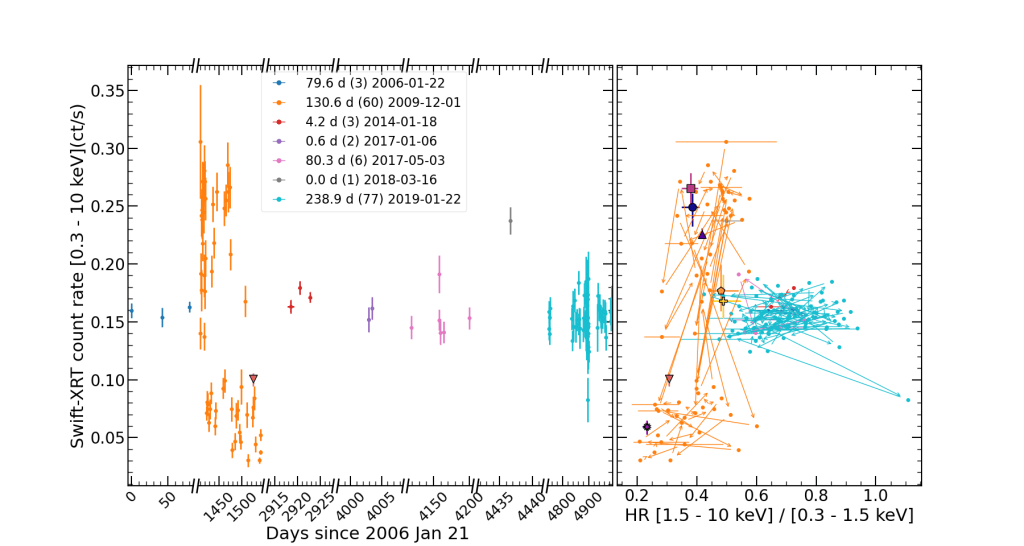
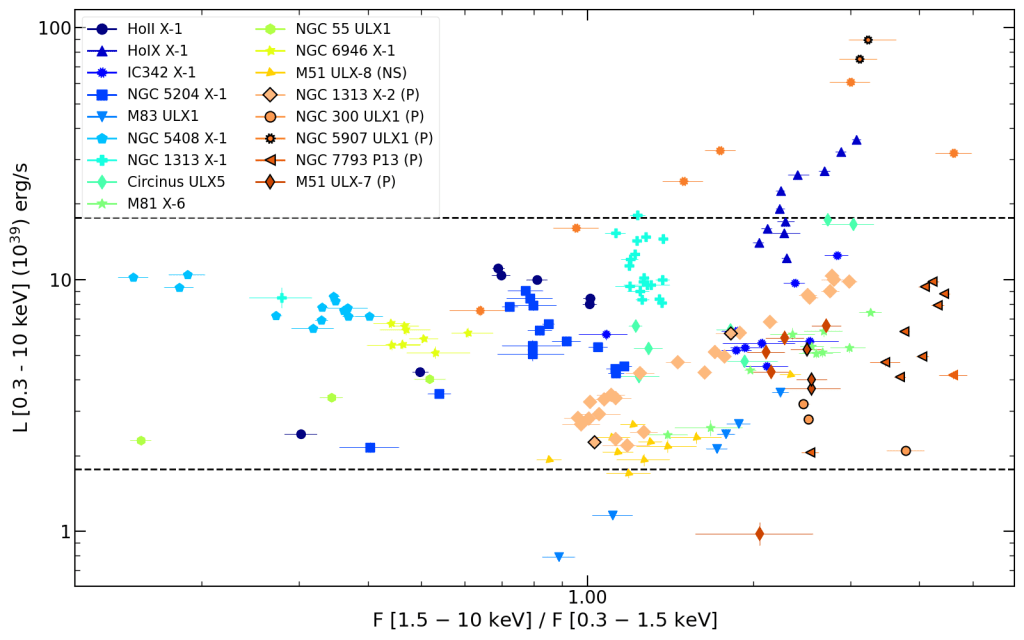
Aims: In order to distinguish between these scenarios, namely, supercritically accreting BHs, weakly magnetised NSs, or strongly magnetised NSs, we study the long-term X-ray spectral evolution of a sample of 17 ULXs with good long-term coverage, 6 of which are known to host NSs. At the same time, this study serves as a baseline to identify potential new NS-ULX candidates.
Methods: We combine archival data from Chandra, XMM-Newton, and NuSTAR observatories in order to sample a wide range of spectral states for each source. We track the evolution of each source in a hardness-luminosity diagram in order to identify spectral changes, and show that these can be used to constrain the accretion flow geometry, and in some cases the nature of the accretor.
Results: We find NS-ULXs to be among the hardest sources in our sample with highly variable high-energy emission. On this basis, we identify M 81 X-6 as a strong NS-ULX candidate, whose variability is shown to be akin to that of NGC 1313 X-2. For most softer sources with an unknown accretor, we identify the presence of three markedly different spectral states, which we interpret by invoking changes in the mass-accretion rate and obscuration by the supercritical wind/funnel structure. Finally, we report on a lack of variability at high energies (≳10 keV) in NGC 1313 X-1 and Holmberg IX X-1, which we argue may offer a means to differentiate BH-ULXs from NS-ULXs.
Conclusions: We support a scenario in which the hardest sources in our sample might be powered by strongly magnetised NSs, meaning that the high-energy emission is dominated by the hard direct emission from the accretion column. Instead, softer sources may be explained by weakly magnetised NSs or BHs, in which the presence of outflows naturally explains their softer spectra through Compton down-scattering, their spectral transitions, and the dilution of the pulsed-emission should some of these sources contain NSs.
57 citations
Co-author
1. The population of hyper-luminous X-ray sources as seen by XMM-Newton
Amato, Roberta, Quintin, Erwan, Tranin, Hugo, Gúrpide, Andrés, Webb, Natalie et al., A&A, 2025
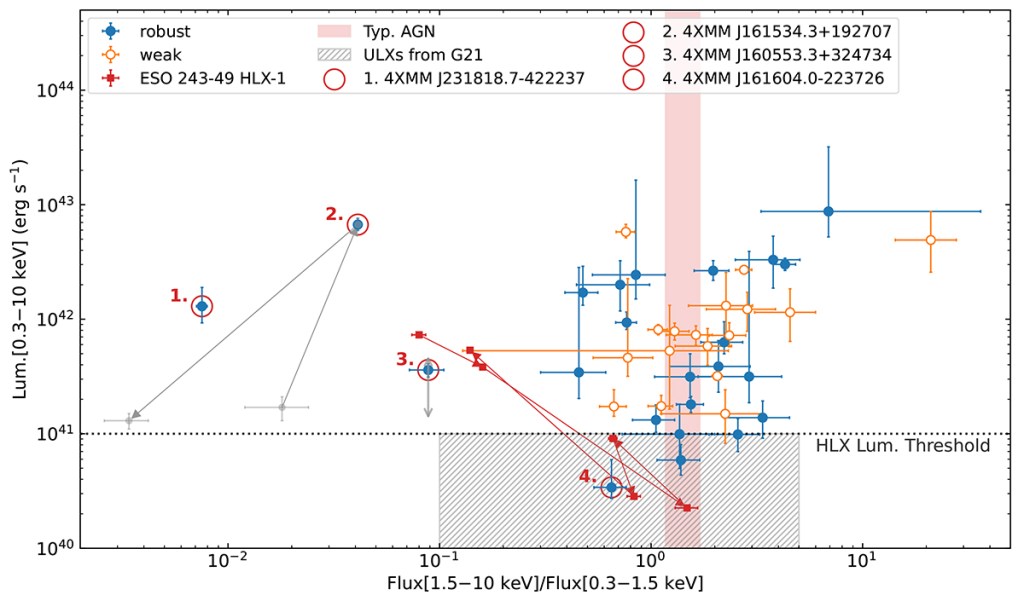
Abstract: Ultraluminous and hyper-luminous X-ray sources (ULXs and HLXs) are among the brightest astrophysical objects in the X-ray sky. While ULXs are most likely to host stellar-mass compact objects accreting at super-Eddington rates, HLXs are compelling candidates for accreting intermediate-mass black holes.
However, HLXs are predominantly found in distant galaxies (d ≳ 100 Mpc), where the chances of source confusion and misidentification with active galactic nuclei (AGNs) or other transient X-ray phenomena are high. Aims. Our goal is to produce a clean sample of HLXs, by removing possible contaminants, and to characterise the spectral properties of the remaining population. This sample can then be used to determine whether different types of astrophysical objects coexist within the same class. Methods. Starting with a set of 115 HLXs detected by XMM-Newton, we identified and removed contaminants (AGNs, X-ray diffuse emission detected as point-like, and tidal disruption event candidates) and retrieved 40 sources for which XMM-Newton spectra are available. We fit them with an absorbed power law model and determined their unabsorbed luminosities and hardness ratios. We constructed the hardness-luminosity diagram and compared the results with the spectral properties of the HLX prototype, ESO 243-49 HLX-1. Then we conducted a deeper analysis on a selection of promising candidates. Results. The resulting HLX population spans a luminosity range from 1 × 1041 erg s‑1 to nearly 1043 erg s‑1 and is homogeneously spread in hardness between 0.5 and 5. Half of the population display hardness ratios higher than a typical AGN and could be considered an extension of the ULX population at higher energies. We found four very soft outliers, which are characterised by steep power law spectra and no X-ray emission above 1–2 keV, similarly to ESO 243-49 HLX-1. Those with multi-epoch archival data display changes in luminosity of up to nearly two orders in magnitude. Conclusions. We show that sources currently identified as HLXs can be more diverse than ULXs and disentangling among these different types of objects is not trivial with the data currently available. New observations would be beneficial to expand the current sample and uncover the true nature of many objects of this class, some of which show very similar characteristics to ESO 243-49 HLX-1.
1 citation
1. QPEs as Lense-Thirring precession of super-Eddington flows
Middleton, M., Gúrpide, A., Kwan, T. M., Dai, L., Arcodia, R. et al., MNRAS, 2025
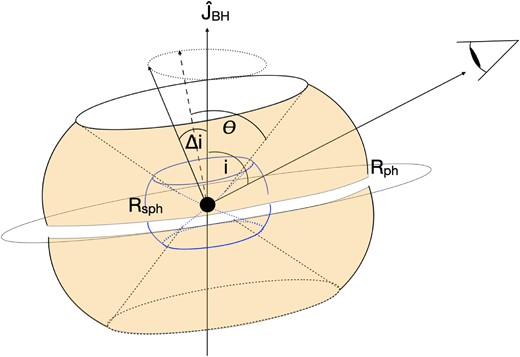
Abstract: Quasi-periodic eruptions (QPEs) are a recently identified class of X-ray transient associated with tidal disruption events by supermassive black holes, and for which there are multiple possible explanations. In this paper we present a simple model which requires the black hole be spinning, be misaligned with the accretion flow (both conditions of which are almost certainly met) and that the accretion rate is a few times the Eddington limit.
We speculate that the resulting Lense-Thirring torques force the disc and entrained outflows to precess, leading to increased X-ray flux when the wind-cone is oriented at lower inclinations to the observer. We test the range of parameters for which this model could explain the period and brightness of the QPE events discovered thus far, and make qualitative comparisons between the observed X-ray spectra and lightcurves to those extracted from GR-RMHD simulations. Overall, we find some areas of promising concordance, and identify challenges related to the details of current simulations.
11 citations
Gandhi, P., Borowski, E. S., Byrom, J., Hynes, R. I., Maccarone, T. J. et al., MNRAS, 2025
Abstract: We present mid-infrared (MIR) spectral-timing measurements of the prototypical Galactic microquasar GRS 1915+105. The source was observed with the Mid-Infrared Instrument (MIRI) onboard JWST in June 2023 at a MIR luminosity LMIR ≈ 1036 erg s-1 exceeding past IR levels by about a factor of 10.
In contrast, the X-ray flux is much fainter than the historical average, in the source’s now-persistent ‘obscured’ state. The MIRI low-resolution spectrum shows a plethora of emission lines, the strongest of which are consistent with recombination in the hydrogen Pfund (Pf) series and higher. Low amplitude (~ 1%) but highly significant peak-to-peak photometric variability is found on timescales of ~ 1,000 s. The brightest Pf (6-5) emission line lags the continuum. Though difficult to constrain accurately, this lag is commensurate with light-travel timescales across the outer accretion disc or with expected recombination timescales inferred from emission line diagnostics. Using the emission line as a bolometric indicator suggests a moderate (~ 5-30 % Eddington) intrinsic accretion rate. Multiwavelength monitoring shows that JWST caught the source close in-time to unprecedentedly bright MIR and radio long-term flaring. Assuming a thermal bremsstrahlung origin for the MIRI continuum suggests an unsustainably high mass-loss rate during this time unless the wind remains bound, though other possible origins cannot be ruled out. PAH features previously detected with Spitzer are now less clear in the MIRI data, arguing for possible destruction of dust in the interim. These results provide a preview of new parameter space for exploring MIR spectral-timing in XRBs and other variable cosmic sources on rapid timescales.
8 citations
3. The high energy X-ray probe (HEX-P): science overview
García, Javier A., Stern, Daniel, Madsen, Kristin, Smith, Miles, Grefenstette, Brian et al., FrASS, 2024
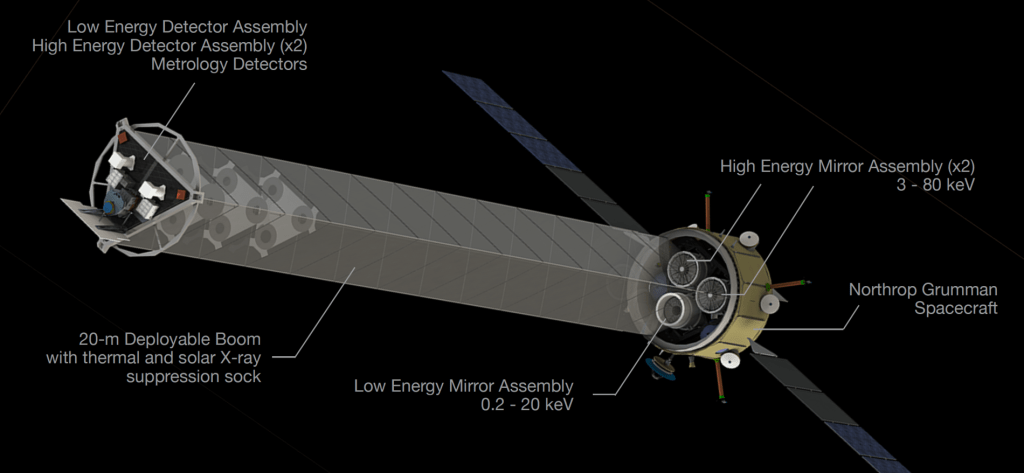
Abstract: To answer NASA’s call for a sensitive X-ray observatory in the 2030s, we present the High Energy X-ray Probe (HEX-P) mission concept. HEX-P is designed to provide the required capabilities to explore current scientific questions and make new discoveries with a broadband X-ray observatory that simultaneously measures sources from 0.2 to 80 keV
. HEX-P’s main scientific goals include: 1) understand the growth of supermassive black holes and how they drive galaxy evolution; 2) explore the lower mass populations of white dwarfs, neutron stars, and stellar-mass black holes in the nearby universe; 3) explain the physics of the mysterious corona, the luminous plasma close to the central engine of accreting compact objects that dominates cosmic X-ray emission; and 4) find the sources of the highest energy particles in the Galaxy. These goals motivate a sensitive, broadband X-ray observatory with imaging, spectroscopic, and timing capabilities, ensuring a versatile platform to serve a broad General Observer (GO) and Guest Investigator (GI) community. In this paper, we present an overview of these mission goals, which have been extensively discussed in a collection of more than a dozen papers that are part of this Research Topic volume. The proposed investigations will address key questions in all three science themes highlighted by Astro2020, including their associated priority areas. HEX-P will extend the capabilities of the most sensitive low- and high-energy X-ray satellites currently in orbit and will complement existing and planned high-energy, time-domain, and multi-messenger facilities in the next decade.
4 citations
Imbrogno, Matteo, Motta, Sara Elisa, Amato, Roberta, Israel, Gian Luca, Rodríguez Castillo, Guillermo Andres et al., A&A, 2024
Abstract: The discovery of pulsations in (at least) six ultraluminous X-ray sources (ULXs) has shown that neutron stars can accrete at (highly) super-Eddington rates, challenging the standard accretion theories. M51 ULX-7, with a spin signal of P ≃ 2.8 s, is the pulsating ULX (PULX) with the shortest known orbital period (Porb ≃ 2 d) and has been observed multiple times by XMM-Newton, Chandra, and NuSTAR.
Aims. We report on the timing and spectral analyses of three XMM-Newton observations of M51 ULX-7 performed between the end of 2021 and the beginning of 2022, together with a timing re-analysis of XMM-Newton, Chandra, and NuSTAR archival observations. Methods. We investigated the spin signal by applying accelerated search techniques and studied the power spectrum through the fast Fourier transform, looking for (a)periodic variability in the source flux. We analysed the energy spectra of the 2021–2022 observations and compared them to the older ones. Results. We report the discovery of a recurrent, significant (> 3σ) broad complex at mHz frequencies in the power spectra of M51 ULX-7. We did not detect the spin signal, setting a 3σ upper limit on the pulsed fraction of ≲10% for the single observation. The complex is significantly detected also in five Chandra observations performed in 2012. Conclusions. M51 ULX-7 represents the second PULX for which we have a significant detection of mHz-QPOs at super-Eddington luminosities. These findings suggest that one should avoid using the observed QPO frequency to infer the mass of the accretor in a ULX. The absence of spin pulsations when the broad complex is detected suggests that the mechanism responsible for the aperiodic modulation also dampens the spin signal’s pulsed fraction. If true, this represents an additional obstacle in the detection of new PULXs suggesting an even larger occurrence of PULXs among ULXs.
12 citations
Wang, Yanan, Pasham, Dheeraj R., Altamirano, Diego, Gúrpide, Andrés, Castro Segura, Noel et al., ApJ, 2024
Abstract: The tidal disruption of a star around a supermassive black hole (SMBH) offers a unique opportunity to study accretion onto an SMBH on a human timescale. We present results from our 1000+ days monitoring campaign of AT 2019avd, a nuclear transient with tidal-disruption-event-like properties, with NICER, Swift, and Chandra.
Our primary finding is that approximately 225 days following the peak of the X-ray emission, there is a rapid drop in luminosity exceeding 2 orders of magnitude. This X-ray dropoff is accompanied by X-ray spectral hardening, followed by a plateau phase of 740 days. During this phase, the spectral index decreases from 6.2 ± 1.1 to 2.3 ± 0.4, while the disk temperature remains constant. Additionally, we detect pronounced X-ray variability, with an average fractional rms amplitude of 47%, manifesting over timescales of a few dozen minutes. We propose that this phenomenon may be attributed to intervening clumpy outflows. The overall properties of AT 2019avd suggest that the accretion disk evolves from a super-Eddington to a sub-Eddington luminosity state, possibly associated with a compact jet. This evolution follows a pattern in the hardness–intensity diagram similar to that observed in stellar-mass BHs, supporting the mass invariance of accretion–ejection processes around BHs.
4 citations
6. Examining the nature of the ultraluminous X-ray source Holmberg II X-1
Barra, F., Pinto, C., Middleton, M., Di Salvo, T., Walton, D. J. et al., A&A, 2024
Abstract: We present a comprehensive spectral analysis of the ultraluminous X-ray source Holmberg II X-1 using broadband and high-resolution X-ray spectra taken with the XMM-Newton satellite over a period of 19 yr, taking advantage of data from a recent campaign. We tested several models for the broadband spectra, including a double thermal component provided a reasonable description for the continuum between 0.
3 and 10 keV and enabled us to constrain the properties of the accretion disc. The luminosity-temperature trends of the inner and outer disc components broadly agree with the expectations for a thin disc, although the exact values of the slopes are slightly sensitive to the adopted model. However, all tested models show L − T trends that deviate from a power law above a bolometric luminosity of about 5 × 1039 erg s−1, particularly for the hot thermal component associated with the inner accretion flow. Assuming that such deviations are due to the accretion rate exceeding its Eddington limit or, most likely, the super-critical rate, a compact object with a mass of 16-36 M⊙ was inferred, specifically, a stellar-mass black hole. The time-averaged (2021) high-resolution spectra present narrow emission lines at 1 keV primarily from Ne IX-X and a very strong at 0.5 keV from N VII, which indicate Ne-N-rich gas with non-solar abundances. This favours a nitrogen-rich donor star, such as a blue or red supergiant, which has escaped from its native stellar cluster characterised by a low-metallicity environment.
11 citations
7. The high energy X-ray probe (HEX-P): studying extreme accretion with ultraluminous X-ray sources
Bachetti, Matteo, Middleton, Matthew J., Pinto, Ciro, Gúrpide, Andrés, Walton, Dominic J. et al., FrASS, 2023
Abstract: Introduction: Ultraluminous X-ray sources (ULXs) represent an extreme class of accreting compact objects: from the identification of some of the accretors as neutron stars to the detection of powerful winds travelling at 0.1–0.2 c, the increasing evidence points towards ULXs harbouring stellar-mass compact objects undergoing highly super-Eddington accretion. Measuring their intrinsic properties, such as the accretion rate onto the compact object, the outflow rate, the masses of accretor/companion-hence their progenitors, lifetimes, and future evolution-is challenging due to ULXs being mostly extragalactic and in crowded fields.
Yet ULXs represent our best opportunity to understand super-Eddington accretion physics and the paths through binary evolution to eventual double compact object binaries and gravitational-wave sources. Methods: Through a combination of end-to-end and single-source simulations, we investigate the ability of HEX-P to study ULXs in the context of their host galaxies and compare it to XMM-Newton and NuSTAR, the current instruments with the most similar capabilities.Results: HEX-P’s higher sensitivity, which is driven by its narrow point-spread function and low background, allows it to detect pulsations and broad spectral features from ULXs better than XMM-Newton and NuSTAR.Discussion: We describe the value of HEX-P in understanding ULXs and their associated key physics, through a combination of broadband sensitivity, timing resolution, and angular resolution, which make the mission ideal for pulsation detection and low-background, broadband spectral studies.
5 citations
8. Propeller states in locally supercritical ULXs
Middleton, M., Gúrpide, A. & Walton, D. J., MNRAS, 2023
Abstract: An expected signature of the presence of neutron stars in the population of ultraluminous X-ray sources (ULXs) are large scale changes in X-ray luminosity, as systems reach spin equilibrium and a propeller state ensues. We explore the predicted luminosity changes when the disc is locally supercritical, finding that a significant parameter space in dipole field strength, and accretion rate (at large radius) can be accompanied by changes of less than an order of magnitude in luminosity.
We discuss the spectral signature and locate three ULXs (IC 342 X-1, Cir ULX-5, and NGC 1313 X-1), which appear to show changes consistent with the super-Eddington systems entering a propeller state, and place rough constraints on the dipole field strength of NGC 1313 X-1 of < 1010 G. This work implies that the most reliable means by which to search for putative propeller states will be to search for changes in hardness ratio and at high energies.
10 citations
Amato, R., Gúrpide, A., Webb, N. A., Godet, O. & Middleton, M. J., A&A, 2023
Abstract: Thanks to their proximity, ultraluminous X-ray sources (ULXs) represent a privileged astrophysical laboratory to study super-Eddington accretion. Current open questions concern the nature of the compact object, which is still hard to determine in those cases where pulsations are not directly detected, and the mechanisms responsible for the spectral changes observed in many ULXs.
Aims: We investigate the nature of the ULX M 81 X-6, which has been suggested to harbour a neutron star (NS), by studying its long-term X-ray spectral and temporal evolution, with the goal of assessing the astrophysical phenomena responsible for its spectral changes.
Methods: Using the rich set of available archival data from XMM-Newton, Chandra, NuSTAR, and Swift/XRT, we tracked the evolution of the source on the hardness-intensity diagram and inferred the different emitting regions of the system and their geometry, as well as the mechanisms responsible for the spectral transitions.
Results: We find that the source oscillates between two main states: one characterised by a hard and luminous spectrum and the other at low hardness and luminosity. The properties of the soft component remain constant between the two states, suggesting that changes in the mass-transfer rate are not driving the spectral transitions. Instead, the bi-modal behaviour of the source and the known super-orbital period would point to the precession of the accretion disc. Here, we tested two theoretical models: (1) Lense-Thirring precession, which can explain the super-orbital period if the NS has a magnetic field B ≲ 1010 G, supporting the idea of M 81 X-6 as a weakly magnetised NS, and (2) precession due to the torque of the NS magnetic field, which leads to B ≳ 1011 G. However, the latter scenario, assuming M 81 X-6 shares similar properties with other NS-ULXs, is disfavoured because it would require magnetic field strengths (B > 1015 G) much higher than those known for other pulsating ULXs. We further show that the contribution from the hard component attributed to the putative accretion column sits just below the typical values found in pulsating ULXs, which, together with the low value of the pulsed fraction (≤10%) found for one XMM-Newton/pn observation, could explain the source’s lack of pulsations.
Conclusions: The spectral properties and variability of M 81 X-6 can be accounted for if the accretor is a NS with a low magnetic field. Under the hypothesis of Lense-Thirring precession, we predict a spin period of the NS of a few seconds. We encourage future X-ray pointed observations to look for pulsations and/or spectral signatures of the magnetic field.
7 citations
10. A new candidate pulsating ULX in NGC 7793
Quintin, E., Webb, N. A., Gúrpide, A., Bachetti, M. & Fürst, F., MNRAS, 2021
Abstract: We report here the discovery of NGC 7793 ULX-4, a new transient ultraluminous X-ray source (ULX) in NGC 7793, a spiral galaxy already well known for harbouring several ULXs. This new source underwent an outburst in 2012, when it was detected by XMM-Newton and the Swift X-ray telescope.
The outburst reached a peak luminosity of 3.4 × 1039 erg s-1 and lasted for about eight months, after which the source went below a luminosity of 1037 erg s-1; previous Chandra observations constrain the low-state luminosity below ∼2 × 1036 erg s-1, implying a variability of at least a factor 1000. We propose four possible optical counterparts, found in archival HST observations of the galaxy. A pulsation in the XMM-Newton signal was found at 2.52 Hz, with a significance of $\sim 3.4\, \sigma$ , and an associated spin-up of $\dot{f} = 3.5\times 10^{-8}$ Hz s-1. NGC 7793 is therefore the first galaxy to host more than one pulsating ULX.
33 citations
11. Gaia Early Data Release 3. Building the Gaia DR3 source list – Cross-match of Gaia observations
Torra, F., Castañeda, J., Fabricius, C., Lindegren, L., Clotet, M. et al., A&A, 2021
Abstract: The Gaia Early Data Release 3 (Gaia EDR3) contains results derived from 78 billion individual field-of-view transits of 2.5 billion sources collected by the European Space Agency’s Gaia mission during its first 34 months of continuous scanning of the sky.
Aims: We describe the input data, which have the form of onboard detections, and the modeling and processing that is involved in cross-matching these detections to sources.
For the cross-match, we formed clusters of detections that were all linked to the same physical light source on the sky.
Methods: As a first step, onboard detections that were deemed spurious were discarded. The remaining detections were then preliminarily associated with one or more sources in the existing source list in an observation-to-source match. All candidate matches that directly or indirectly were associated with the same source form a match candidate group. The detections from the same group were then subject to a cluster analysis. Each cluster was assigned a source identifier that normally was the same as the identifiers from Gaia DR2. Because the number of individual detections is very high, we also describe the efficient organising of the processing.
Results: We present results and statistics for the final cross-match with particular emphasis on the more complicated cases that are relevant for the users of the Gaia catalogue. We describe the improvements over the earlier Gaia data releases, in particular for stars of high proper motion, for the brightest sources, for variable sources, and for close source pairs.
77 citations
Vasilopoulos, Georgios, Koliopanos, Filippos, Haberl, Frank, Treiber, Helena, Brightman, Murray et al., ApJ, 2021
Abstract: We report on the temporal properties of the ultraluminous X-ray (ULX) pulsar M51 ULX-7 inferred from the analysis of the 2018-2020 Swift/X-ray Telescope monitoring data and archival Chandra data obtained over a period of 33 days in 2012. We find an extended low flux state, which might be indicative of propeller transition, lending further support to the interpretation that the neutron star is rotating near equilibrium.
Alternatively, this off-state could be related to a variable superorbital period. Moreover, we report the discovery of periodic dips in the X-ray light curve that are associated with the binary orbital period. The presence of the dips implies a configuration where the orbital plane of the binary is closer to an edge-on orientation, and thus demonstrates that favorable geometries are not necessary in order to observe ULX pulsars. These characteristics are similar to those seen in prototypical X-ray pulsars such as Her X-1 and SMC X-1 or other ULX pulsars such as NGC 5907 ULX1.
26 citations
13. Gaia Data Release 1. Testing parallaxes with local Cepheids and RR Lyrae stars
Gaia Collaboration, Clementini, G., Eyer, L., Ripepi, V., Marconi, M. et al., A&A, 2017
Abstract: Parallaxes for 331 classical Cepheids, 31 Type II Cepheids, and 364 RR Lyrae stars in common between Gaia and the HIPPARCOS and Tycho-2 catalogues are published in Gaia Data Release 1 (DR1) as part of the Tycho-Gaia Astrometric Solution (TGAS).
Aims: In order to test these first parallax measurements of the primary standard candles of the cosmological distance ladder, which involve astrometry collected by Gaia during the initial 14 months of science operation, we compared them with literature estimates and derived new period-luminosity (PL), period-Wesenheit (PW) relations for classical and Type II Cepheids and infrared PL, PL-metallicity (PLZ), and optical luminosity-metallicity (MV-[Fe/H]) relations for the RR Lyrae stars, with zero points based on TGAS.
Methods: Classical Cepheids were carefully selected in order to discard known or suspected binary systems. The final sample comprises 102 fundamental mode pulsators with periods ranging from 1.68 to 51.66 days (of which 33 with σϖ/ϖ< 0.5). The Type II Cepheids include a total of 26 W Virginis and BL Herculis stars spanning the period range from 1.16 to 30.00 days (of which only 7 with σϖ/ϖ< 0.5). The RR Lyrae stars include 200 sources with pulsation period ranging from 0.27 to 0.80 days (of which 112 with σϖ/ϖ< 0.5). The new relations were computed using multi-band (V,I,J,Ks) photometry and spectroscopic metal abundances available in the literature, and by applying three alternative approaches: (i) linear least-squares fitting of the absolute magnitudes inferred from direct transformation of the TGAS parallaxes; (ii) adopting astrometry-based luminosities; and (iii) using a Bayesian fitting approach. The last two methods work in parallax space where parallaxes are used directly, thus maintaining symmetrical errors and allowing negative parallaxes to be used. The TGAS-based PL,PW,PLZ, and MV– [Fe/H] relations are discussed by comparing the distance to the Large Magellanic Cloud provided by different types of pulsating stars and alternative fitting methods.
Results: Good agreement is found from direct comparison of the parallaxes of RR Lyrae stars for which both TGAS and HST measurements are available. Similarly, very good agreement is found between the TGAS values and the parallaxes inferred from the absolute magnitudes of Cepheids and RR Lyrae stars analysed with the Baade-Wesselink method. TGAS values also compare favourably with the parallaxes inferred by theoretical model fitting of the multi-band light curves for two of the three classical Cepheids and one RR Lyrae star, which were analysed with this technique in our samples. The K-band PL relations show the significant improvement of the TGAS parallaxes for Cepheids and RR Lyrae stars with respect to the HIPPARCOS measurements. This is particularly true for the RR Lyrae stars for which improvement in quality and statistics is impressive.
Conclusions: TGAS parallaxes bring a significant added value to the previous HIPPARCOS estimates. The relations presented in this paper represent the first Gaia-calibrated relations and form a work-in-progress milestone report in the wait for Gaia-only parallaxes of which a first solution will become available with Gaia Data Release 2 (DR2) in 2018.
104 citations
14. Gaia Data Release 1. Open cluster astrometry: performance, limitations, and future prospects
Gaia Collaboration, van Leeuwen, F., Vallenari, A., Jordi, C., Lindegren, L. et al., A&A, 2017
Abstract: The first Gaia Data Release contains the Tycho-Gaia Astrometric Solution (TGAS). This is a subset of about 2 million stars for which, besides the position and photometry, the proper motion and parallax are calculated using HIPPARCOS and Tycho-2 positions in 1991.
25 as prior information.
Aims: We investigate the scientific potential and limitations of the TGAS component by means of the astrometric data for open clusters.
Methods: Mean cluster parallax and proper motion values are derived taking into account the error correlations within the astrometric solutions for individual stars, an estimate of the internal velocity dispersion in the cluster, and, where relevant, the effects of the depth of the cluster along the line of sight. Internal consistency of the TGAS data is assessed.
Results: Values given for standard uncertainties are still inaccurate and may lead to unrealistic unit-weight standard deviations of least squares solutions for cluster parameters. Reconstructed mean cluster parallax and proper motion values are generally in very good agreement with earlier HIPPARCOS-based determination, although the Gaia mean parallax for the Pleiades is a significant exception. We have no current explanation for that discrepancy. Most clusters are observed to extend to nearly 15 pc from the cluster centre, and it will be up to future Gaia releases to establish whether those potential cluster-member stars are still dynamically bound to the clusters.
Conclusions: The Gaia DR1 provides the means to examine open clusters far beyond their more easily visible cores, and can provide membership assessments based on proper motions and parallaxes. A combined HR diagram shows the same features as observed before using the HIPPARCOS data, with clearly increased luminosities for older A and F dwarfs.
98 citations
15. The Gaia mission
Gaia Collaboration, Prusti, T., de Bruijne, J. H. J., Brown, A. G. A., Vallenari, A. et al., A&A, 2016
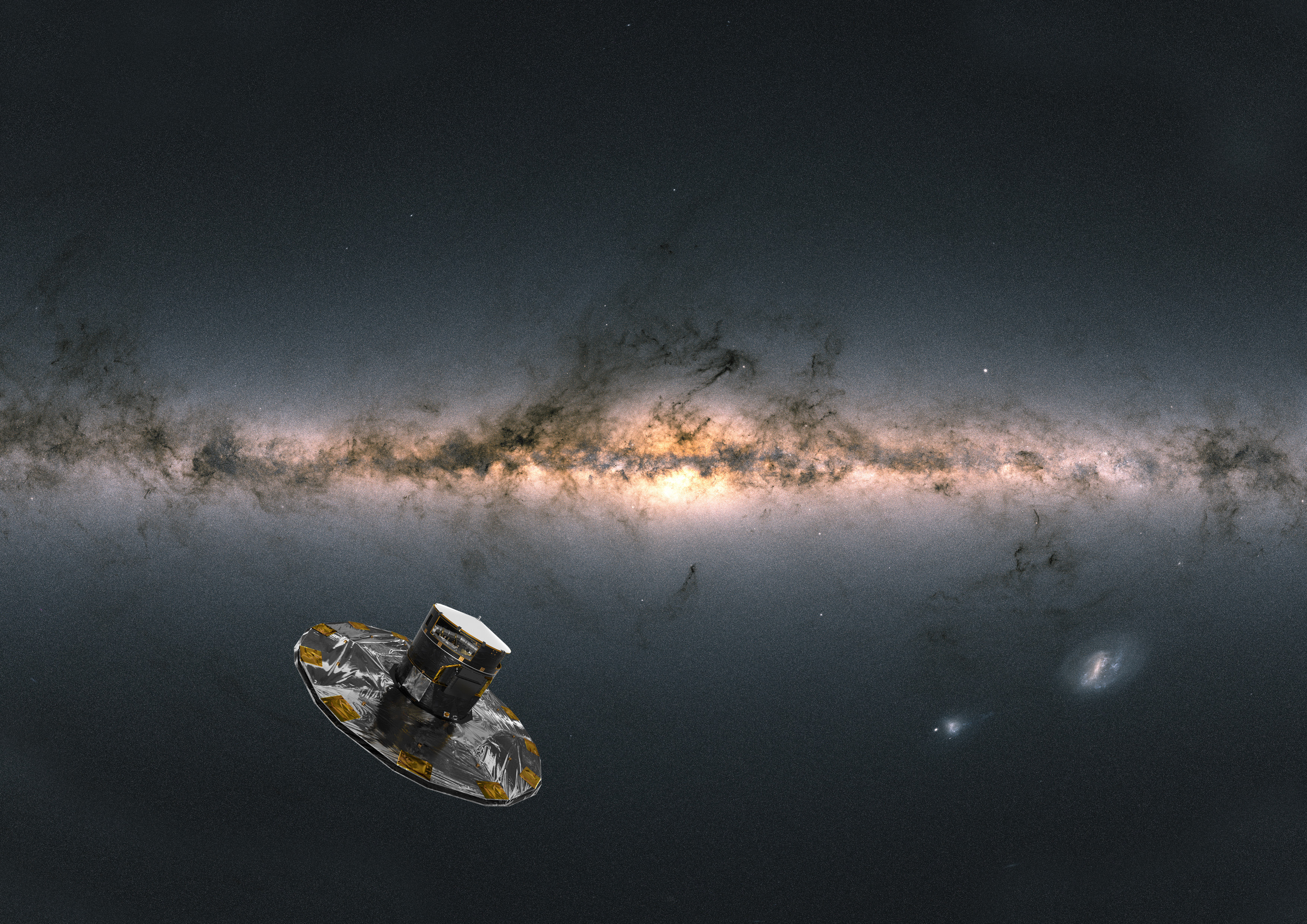
Abstract: Gaia is a cornerstone mission in the science programme of the EuropeanSpace Agency (ESA). The spacecraft construction was approved in 2006, following a study in which the original interferometric concept was changed to a direct-imaging approach.
Both the spacecraft and the payload were built by European industry. The involvement of the scientific community focusses on data processing for which the international Gaia Data Processing and Analysis Consortium (DPAC) was selected in 2007. Gaia was launched on 19 December 2013 and arrived at its operating point, the second Lagrange point of the Sun-Earth-Moon system, a few weeks later. The commissioning of the spacecraft and payload was completed on 19 July 2014. The nominal five-year mission started with four weeks of special, ecliptic-pole scanning and subsequently transferred into full-sky scanning mode. We recall the scientific goals of Gaia and give a description of the as-built spacecraft that is currently (mid-2016) being operated to achieve these goals. We pay special attention to the payload module, the performance of which is closely related to the scientific performance of the mission. We provide a summary of the commissioning activities and findings, followed by a description of the routine operational mode. We summarise scientific performance estimates on the basis of in-orbit operations. Several intermediate Gaia data releases are planned and the data can be retrieved from the Gaia Archive, which is available through the Gaia home page.
http://www.cosmos.esa.int/gaia6709 citations
16. Gaia Data Release 1. Summary of the astrometric, photometric, and survey properties
Gaia Collaboration, Brown, A. G. A., Vallenari, A., Prusti, T., de Bruijne, J. H. J. et al., A&A, 2016
Abstract: At about 1000 days after the launch of Gaia we present the first Gaia data release, Gaia DR1, consisting of astrometry and photometry for over 1 billion sources brighter than magnitude 20.7.
Aims: A summary of Gaia DR1 is presented along with illustrations of the scientific quality of the data, followed by a discussion of the limitations due to the preliminary nature of this release.
Methods: The raw data collected by Gaia during the first 14 months of the mission have been processed by the Gaia Data Processing and Analysis Consortium (DPAC) and turned into an astrometric and photometric catalogue.
Results: Gaia DR1 consists of three components: a primary astrometric data set which contains the positions, parallaxes, and mean proper motions for about 2 million of the brightest stars in common with the Hipparcos and Tycho-2 catalogues – a realisation of the Tycho-Gaia Astrometric Solution (TGAS) – and a secondary astrometric data set containing the positions for an additional 1.1 billion sources. The second component is the photometric data set, consisting of mean G-band magnitudes for all sources. The G-band light curves and the characteristics of 3000 Cepheid and RR Lyrae stars, observed at high cadence around the south ecliptic pole, form the third component. For the primary astrometric data set the typical uncertainty is about 0.3 mas for the positions and parallaxes, and about 1 mas yr-1 for the proper motions. A systematic component of 0.3 mas should be added to the parallax uncertainties. For the subset of 94 000 Hipparcos stars in the primary data set, the proper motions are much more precise at about 0.06 mas yr-1. For the secondary astrometric data set, the typical uncertainty of the positions is 10 mas. The median uncertainties on the mean G-band magnitudes range from the mmag level to 0.03 mag over the magnitude range 5 to 20.7.
Conclusions: Gaia DR1 is an important milestone ahead of the next Gaia data release, which will feature five-parameter astrometry for all sources. Extensive validation shows that Gaia DR1 represents a major advance in the mapping of the heavens and the availability of basic stellar data that underpin observational astrophysics. Nevertheless, the very preliminary nature of this first Gaia data release does lead to a number of important limitations to the data quality which should be carefully considered before drawing conclusions from the data.
2024 citations
 Andrés Gúrpide Lasheras